









Agentic MarTech For Indian Enterprises: A Comprehensive Executive Playbook
Table of Contents
CEO, Hansa Cequity
We are standing at the threshold of the most profound transformation in enterprise capability since the rise of digital. The era of agentic enterprises—where autonomous, intelligent agents augment human decision-making and orchestrate entire business workflows—is no longer a speculative horizon. It is here, reshaping how brands sense customer intent, adapt in real time, and scale trust through transparency and governance.
Over the past decade, Indian organizations have made remarkable progress in digital and data maturity. Yet, as generative and agentic AI technologies mature, a new gap has emerged—not in access to data or tools, but in how effectively enterprises can align intelligence, autonomy, and human oversight to deliver compounding business value. This gap will define the next generation of market leaders.
This Agentic Enterprise Playbook has been crafted for CXOs who recognize that the future of martech, experience, and growth is no longer about assembling tools—it is about designing an intelligent operating system for the organization itself. The insights distilled here draw upon real-world implementations, governance models, and cross-sector learnings to guide enterprises from experimentation to scale.
As you read through its frameworks and examples, I encourage you to view AI not as a new department or initiative, but as a new way of thinking—one that connects purpose, data, and action seamlessly. The winners of this decade will not be those with the most advanced tools, but those with the most adaptive systems.
The journey to becoming an agentic enterprise is not optional—it is existential. And it begins with leadership willing to rethink what “intelligence at scale” truly means.
Agentic Martech For Indian Enterprises – Part 1: Strategy
From Martech Stack To Intelligent Growth System: Why 2026 Is A Breakout Year For Indian Enterprises
The Strategic Imperative
The marketing technology landscape has undergone a fundamental transformation over the past decade. What began as point solutions—email platforms, analytics dashboards, social schedulers—has evolved into a complex ecosystem of specialized tools. Yet the critical insight many enterprise leaders have missed is this: the real value in martech has never been the tools themselves. The value has always been in how tools enable smarter, faster, more personalized customer decisions at scale.
For the past decade, that constraint—the speed and personalization of customer decisions—was primarily a human constraint. CMOs and their teams, armed with dashboards and insights, made the decisions about which customers to target, what offers to present, when to communicate. The best tools were those that made human decision-making faster and better informed.
In 2026, that constraint has shifted. The bottleneck is no longer human decision-making speed—it is the sheer volume of decisions required in a modern customer journey. A single customer might generate hundreds of decision points in a week: when to send the next message, which channel to use, what offer is appropriate, how to adjust the journey based on their behavior. No human team can make those decisions manually at the scale required.
This is where agentic AI fundamentally changes the game.
Why 2026 Is Structurally Different
Three forces converge in 2026 to create an unprecedented opportunity—but also an unprecedented risk—for Indian enterprises.
First: Agentic AI has moved from research lab to operational reality.
For some time, AI in marketing meant either automation (if-this-then-that rules) or assistance (dashboards showing recommendations). Both required human approval or trigger. The fundamental shift in 2026 is that AI agents can now plan, act, and learn autonomously within guardrails, making thousands of real-time decisions daily with accountability and observability.
This is not theoretical. Global implementations demonstrate measurable impact:
These are not edge cases or 5-year projections. These are operational realities delivering ROI today.
For Indian enterprises, this opportunity is particularly acute. In BFSI, fintech, and digital-first D2C segments, the competitive intensity is high, customer expectations for personalization are rising, and the scale of customer interactions is enormous. Agentic AI can provide disproportionate advantage precisely in high-volume, high-complexity environments where traditional martech becomes a bottleneck.
Second: India’s AI and data governance landscape is crystallizing.
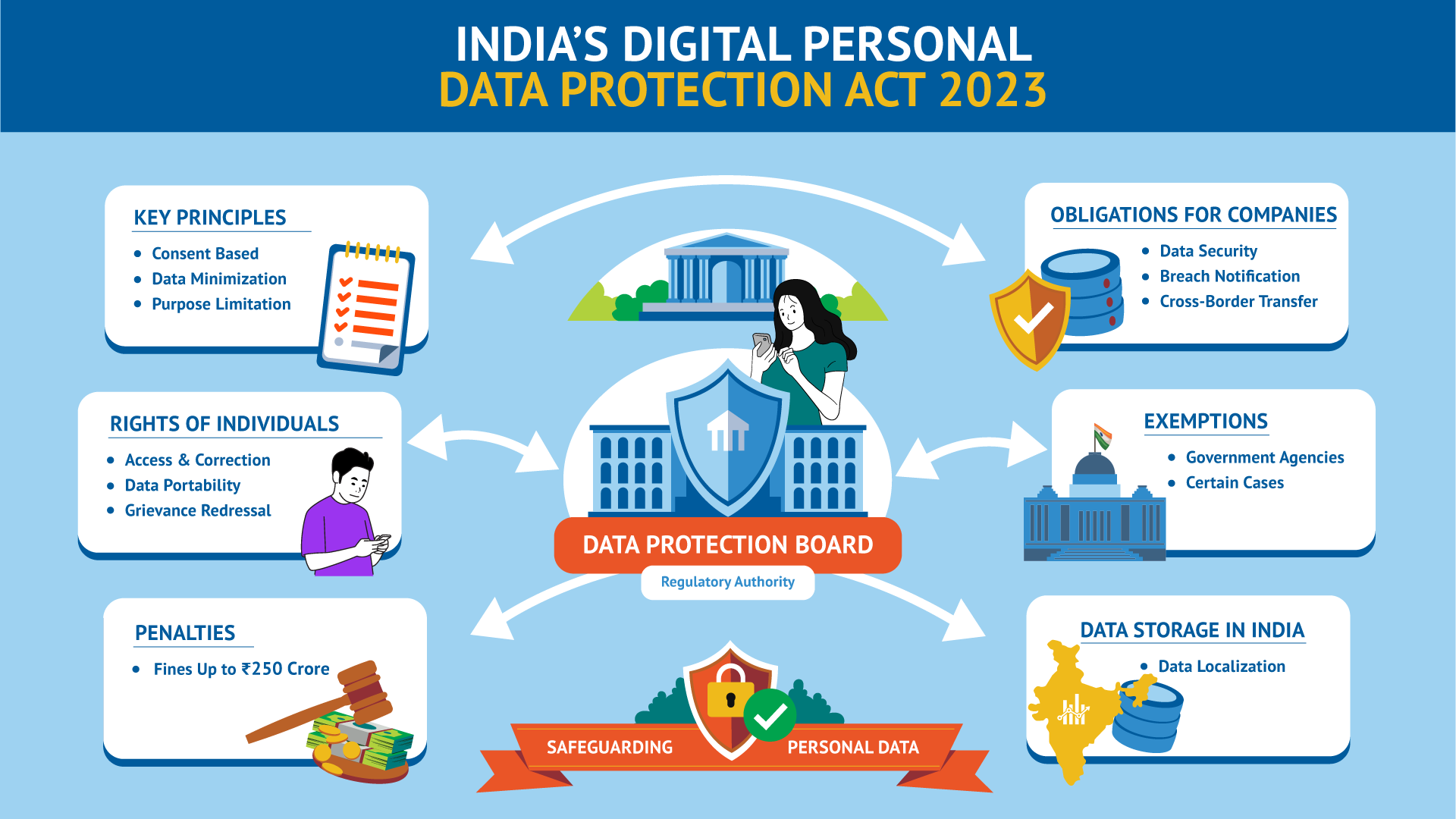
The IndiaAI Mission, India’s ‘DPDPA 2023’ enforcement, and sectoral regulations (RBI guidelines for banking, IRDA for insurance, SEBI for financial services) are creating a policy framework that favors enterprises that plan for governance from the outset rather than retrofitting it later.
This is a significant shift from the “move fast and break things” ethos that characterized early martech adoption. In 2026, Indian CXOs must assume that:
For enterprise leaders, this means that governance—far from being a constraint—is actually a competitive advantage. Organizations that build governance into their martech architecture from the start will be able to scale agents faster and with better customer trust than those trying to retrofit controls.
Third: CDPs are evolving from “repositories” to “action engines.”
For years, the CDP narrative focused on unification: “Customer Single View “, “breaking down data silos”, “360-degree customer profiles”. While these still remain relevant, the real value creation in 2026 is happening a layer higher.
Leading organizations use CDPs to store unified customer data as well as:
Real-world impact: a travel company using Adobe Analytics + RT‑CDP + AEM delivers personalized campaigns to customers immediately after they search for flights—triggering email, push, and SMS offers in real-time, with measurable conversion uplift. Insurance companies identify abandoned applications in real-time & trigger personalized follow-ups.
For Indian enterprises, this shift means that the CDP selection is no longer separate from the martech architecture decision—it is central to it.
The Strategic Framework: Three Dimensions of Intelligent Growth
Based on analysis of 50+ successful enterprise implementations and 100+ organizations still struggling with martech ROI, the critical success factors cluster into three strategic dimensions.
Organizations that excel across all three dimensions achieve 3-4x marketing ROI compared to peers, scale agents safely, and build durable competitive advantage.
Dimension 1: Customer Data & AI Architecture
Definition: The ability to construct, maintain, and act on a unified, real-time, AI-enriched customer fabric that enables both human decision-makers and autonomous agents to operate with high confidence.
What this means in practice:
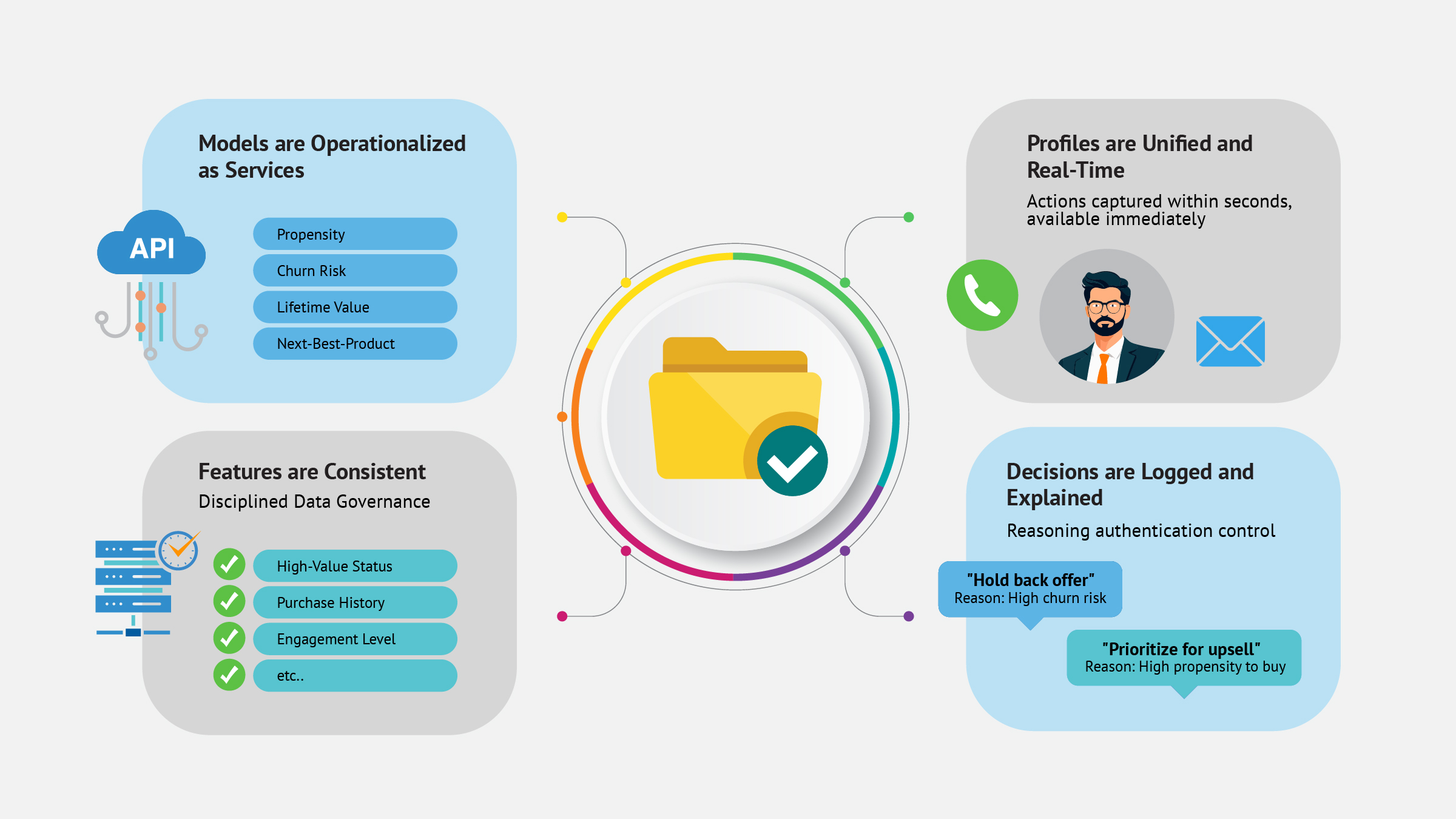
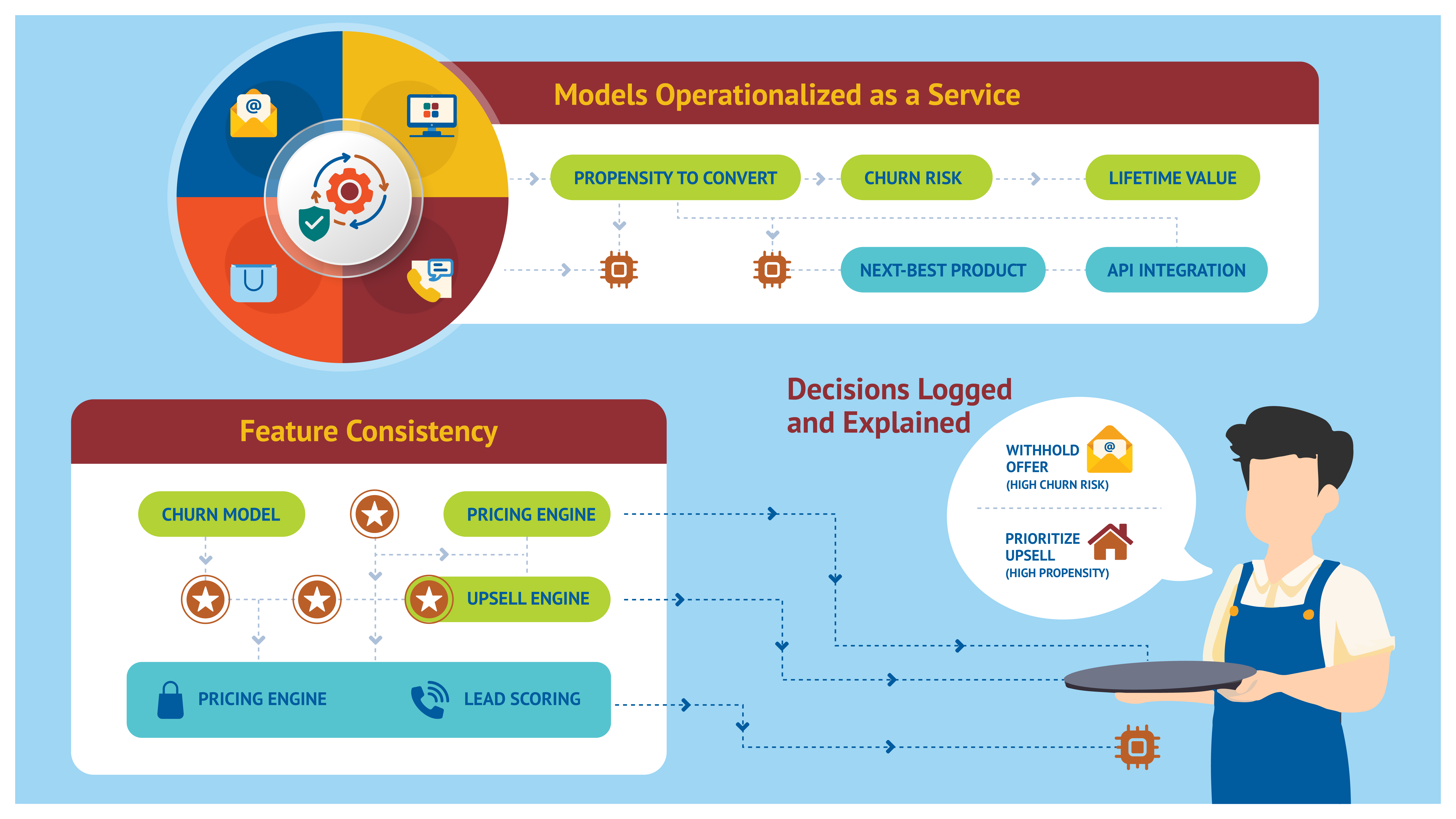
The foundation is a unified customer graph—the basic promise of CDPs. But in 2026, the graph must be extended to what we call a “customer and feature fabric”.
In concrete terms, this means:
Why this matters:
Organizations without this foundation make decisions on fragmented customer views. A customer is “high value” in one system (BFSI core banking), “low engagement” in another (marketing automation), and “high support cost” in a third (service). When agents try to act, they operate with incomplete information, making suboptimal or contradictory decisions.
Organizations with mature data and AI architecture achieve 3-4x higher marketing ROI. More importantly, their agents make decisions with confidence because they know the data is consistent, complete, and current.
How to assess your organization:
Dimension 2: Agentic Personalization & Decisioning
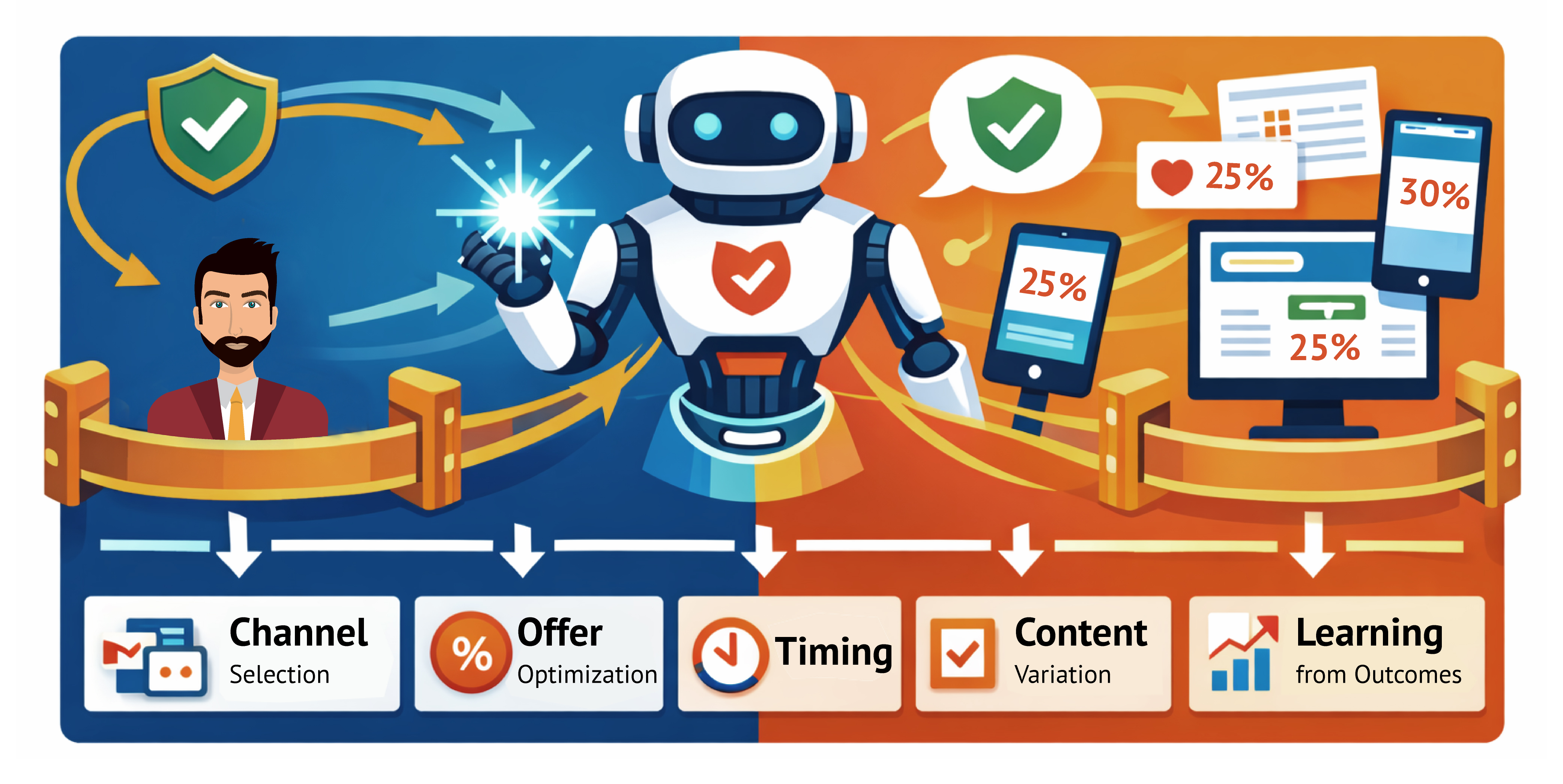
Definition: The capability to design and deploy autonomous agents that make context-aware, real-time decisions about customer interactions (channel selection, offer optimization, timing, content variation) within explicit guardrails, continuously learning from outcomes.
What this means in practice:
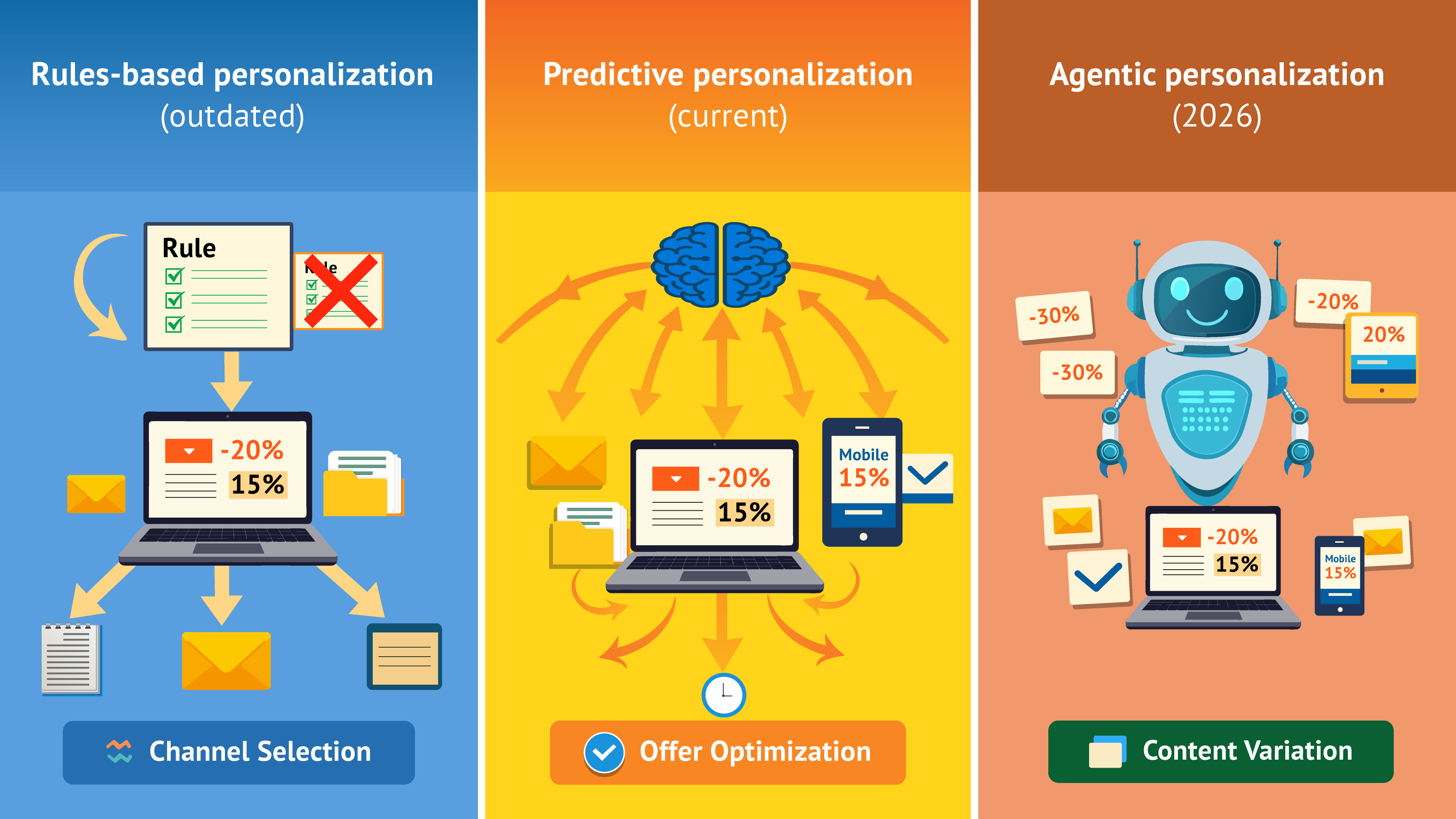
The spectrum of personalization capabilities has expanded significantly:
Real-world implementations show dramatic impact:
The distinction from “marketing automation” is critical: marketing automation executes predefined flows. Agentic personalization defines objectives and constraints, then lets agents explore millions of micro-variations to find optimal paths.
Why this matters:
The personalization opportunity in customer journeys is enormous—but capturing it manually is impossible. A customer might be receptive to an offer at 2 PM on Tuesday but not Wednesday morning. They prefer WhatsApp 60% of the time but email 40%. They respond to 15% off but not 10%. They tolerate 2 touches per week but churn after 4.
Asking a human team to calculate optimal personalization across millions of customers, dozens of decision points per customer per week, and hundreds of variables is simply not feasible. Agents can do this in real-time.
But agents without constraints become reckless: they discount excessively to drive conversions in the short term, they spam customers with high-frequency messaging, they violate brand guidelines in pursuit of engagement. This is why explicit guardrails—defining what agents can and cannot do—are as important as agent capability itself.
How to assess your organization:
Dimension 3: Operational Autonomy & Marketing Scalability
Definition: The capacity for marketing and customer-facing teams to scale their impact without proportional increases in headcount, achieved by automating routine decision-making and operational tasks, freeing high-value talent for strategy, creativity, and complex relationship management.
What this means in practice:
This dimension has three sub-components:
A) Automation of routine decisions
Marketing automation platforms handle if-this-then-that logic: if customer abandoned cart, send recovery email. If customer hasn’t opened email in 30 days, move to SMS. If customer has made 3+ purchases, move to VIP segment.
This automation is valuable—it eliminates manual task creation and improves consistency. But it is still rules-based and requires humans to define the rules.
In 2026, a new layer sits on top: agents that optimize the rules themselves. An agent observes that cart recovery emails sent at 9 AM have 18% open rate while 6 PM sends have 24% open rate. It automatically updates the send-time rule. Another agent notices that VIP treatment works for customers with LTV > ₹50K but backfires for customers with LTV ₹10-50K (they feel patronized). It creates a new segment.
B) Observability and exceptions management.
Traditional marketing ops require humans to periodically review campaign dashboards, spot problems, and manually fix them. An email campaign with 40% bounce rate requires human intervention to pause and diagnose.
Agentic operations agents monitor continuously. When bounce rate exceeds expected range, they pause the campaign, alert the team, and propose hypotheses (deliverability issue, bad data import, ISP blocking). When a cohort shows unexpectedly high conversion, they flag it as a learning opportunity. When a test variant performs significantly better, they automatically promote it and retire the loser.
This real-time exception management prevents small problems from becoming major incidents.
C) Freeing high-value talent.
When routine decisions are automated and operations are handled by agents, the human team shifts from execution to strategy:
Real organizational impact is substantial:
The economic model is compelling: organizations either increase customer throughput with the same team, or redeploy team members to higher-value work. Both scenarios improve profitability.
Why this matters:
Talent scarcity is real. Marketing, sales, and service leaders struggle to find people willing to do routine, repetitive work. Agents solve this by handling the repetitive work while freeing talented people for the work only humans can do well—strategy, creativity, relationship-building, ethical judgment.
The cost model changes. In traditional martech, fixed costs (platforms, infrastructure) are low, but variable costs (people) scale with volume. With agentic systems, fixed costs increase slightly (platform licensing, data infrastructure), but variable costs remain flat or decrease as agents handle incremental volume.
How to assess your organization:
Translating Strategy To Architecture
The three dimensions outlined above are strategic imperatives, not tactical features. But strategy without architecture is merely aspiration.
The critical insight: All three dimensions depend on foundational architecture choices you make now about how data flows, where agents live, and how guardrails are enforced.
For example:
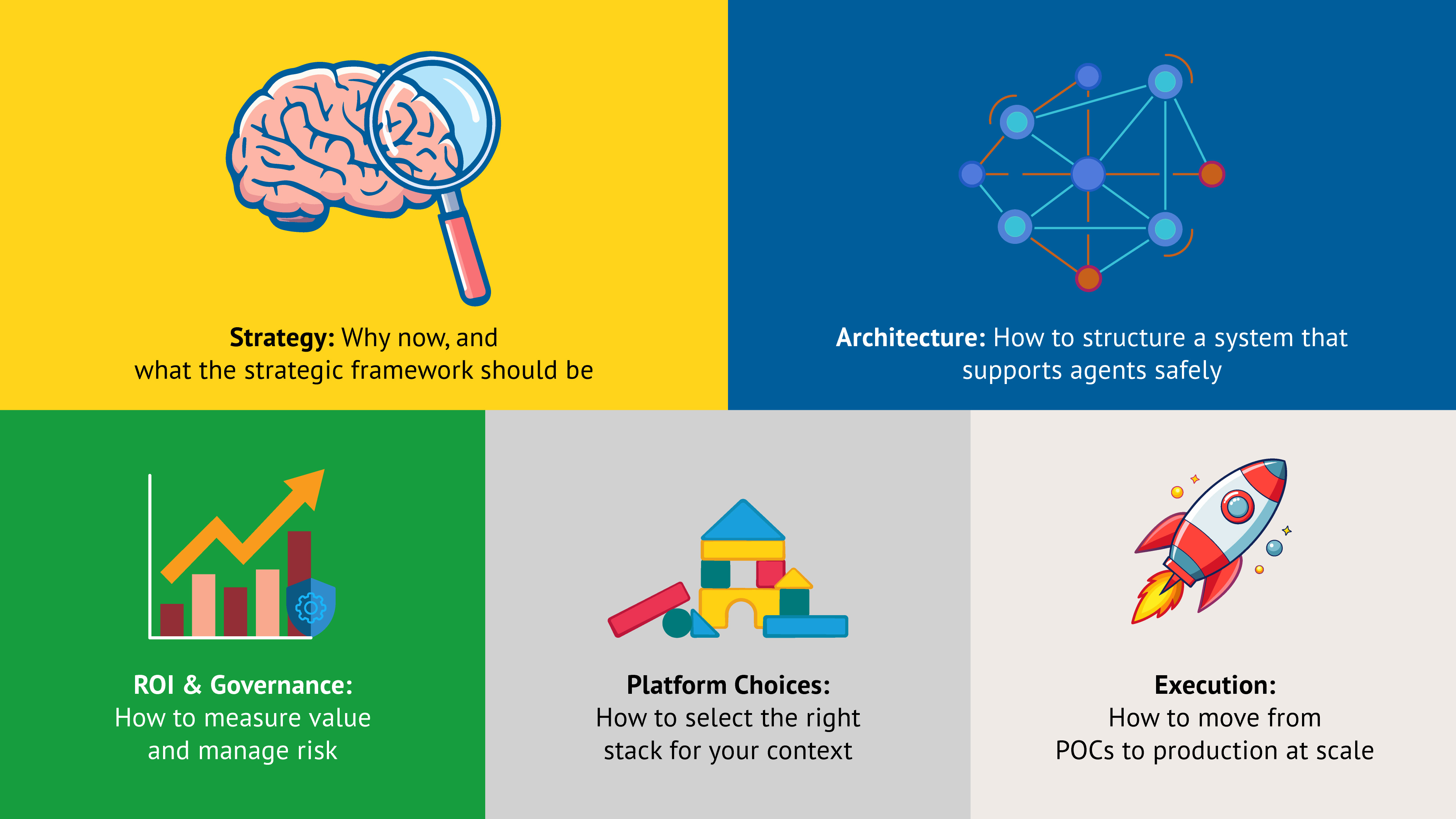
This is why Part 2 (Architecture) and Part 3 (ROI & Governance) are as important as Part 1 strategy. They translate strategic intent into operational capability.
Global Case Studies: Agentic AI In Action
To ground this discussion in reality, several examples of how leading organizations are executing against these three dimensions:
Retail & Demand Forecasting
Walmart’s dynamic pricing agents process 500 million price points weekly. The agent observes:
Based on these inputs, the agent autonomously adjusts prices for 50,000+ items daily. The result: 12% margin improvement while maintaining price competitiveness.
This demonstrates all three dimensions:
Personalization at Scale: Starbucks Mobile Marketing
Starbucks’ mobile marketing platform reaches 16 million users, personalizing offers based on purchase history, location, weather, time of day, and seasonality. An agent analyzes:
The system delivers personalized offers that result in $2.56 billion in annual mobile revenue.
Enterprise Sales Automation: Manufacturing
A manufacturer of industrial equipment deployed Salesforce Agentforce to streamline quoting. The agent:
Results:
Customer Service Autonomy: Salesforce
Salesforce itself operates Agentforce Service Cloud, handling 32,000 customer conversations weekly. The agents:
Performance metrics:
These are not 5-year projections or controlled experiments. These are operational realities delivering business value today, across diverse industries and customer bases.
India-Specific Patterns
While the global case studies above provide strategic context, Indian enterprises operate in a unique market with distinct characteristics. Understanding these characteristics is essential for translating global patterns into India-specific strategy.
BFSI and Fintech:
India’s banking and fintech sectors operate at enormous scale (hundreds of millions of customers) with intense competition, complex regulations, and high customer expectations for personalization and service.
A large Indian private bank recently redesigned its onboarding journey after discovering that 60% of customers who opened accounts in branches never logged into the app, and 40% of digital dropoffs occurred between app download and first login.
They introduced agentic personalization:
Results:
Double-digit uplift in app activation, higher product adoption, better retention.
D2C and fast-moving consumer goods:
Indian D2C brands face intense competition from traditional retail and global e-commerce players. The competitive advantage is personalization, availability, and customer experience.
A Tier-1 beauty brand used to send the same onboarding sequence to all new customers. By integrating app, web, and WhatsApp data and introducing agentic journey orchestration, they discovered:
They deployed agents to autonomously adjust channel mix, timing, and offer for each customer cohort. Results: 25-30% faster conversion for high-intent cohorts, fewer churn incidents for low-intent customers.
Key takeaway: India-specific strategy must account for:
The three strategic dimensions translate to India context:
The Board Conversation: What To Communicate
For CXOs preparing to discuss this strategy with boards, the conversation should be framed around three business outcomes, not technology features:
Frame: “Our competitors are limited by their team’s capacity. They can personalize for high-value segments, but they lack the resources to optimize for millions of customers individually. By moving personalization decisions to agents, we can compete on experience differentiation with any global competitor—but at a fraction of the team and technology cost.”
Supporting evidence: Starbucks generates $2.56B mobile revenue through personalized offers. Fashion retailers achieve 32% conversion increases through AI-orchestrated experiences. Insurance companies recover abandoned applications worth millions through personalized interventions.
Frame: “Our marketing team can grow our customer interactions by 25% next year—and our headcount stays flat. Instead of adding staff to handle volume, we redeploy talent to strategy and creativity.”
Supporting evidence: Manufacturers eliminated bottlenecks in quoting and handling 30% more volume. Service operations resolved 83% of cases autonomously. Claims processing handled 60% faster with smaller team.
3. Disciplined governance that is a competitive advantage
Frame: “Regulators increasingly expect organizations to explain AI decisions. Rather than retrofitting governance later, we’re building it in from the start—which means we can scale agents faster and with more customer trust than competitors playing catch-up on compliance.”
Supporting evidence: EY India survey shows half of enterprises have multiple GenAI use cases in production; those with governance frameworks are scaling faster and facing fewer incidents. Insurance company caught discriminatory pricing early because they had logging and auditability.
Designing A 2026 Martech Architecture: Where Do AI Agents Actually Live?
The Architecture Imperative
Strategy without architecture is aspirational thinking. A CXO can articulate why agentic AI matters—but if the martech architecture cannot support agents safely, the strategy remains unrealized.
This section is written for technology leaders (CTOs, CDOs, VP Engineering) responsible for making architecture decisions, as well as CMOs and CXOs who need to understand architecture trade-offs well enough to make informed platform and investment choices.
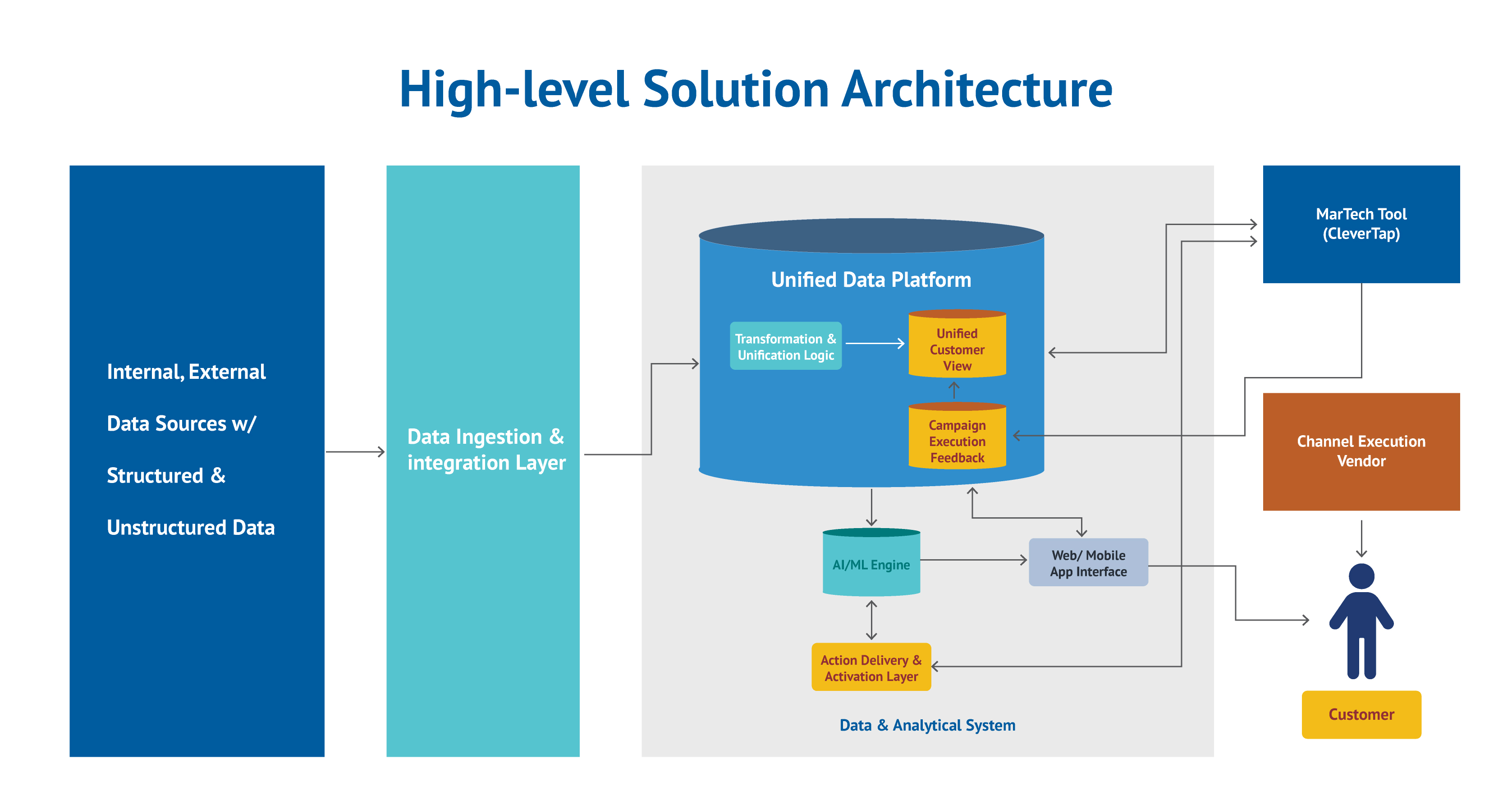
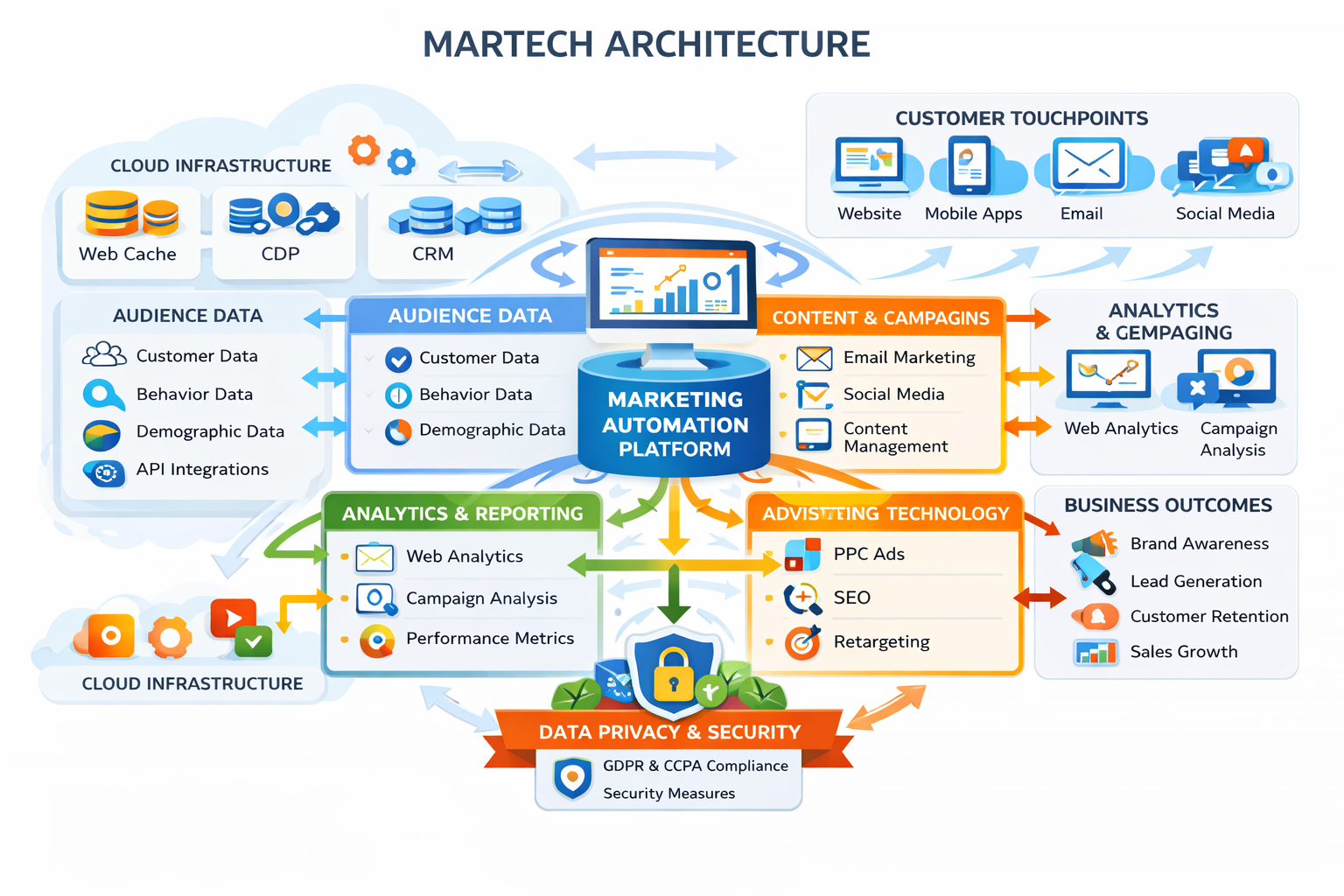
The fundamental insight is this: Your martech architecture in 2026 is not a collection of point solutions. It is a system of systems, with explicitly defined interfaces, data flows, and governance layers. Agents are not a separate overlay—they are a core architectural layer.
The Three-Layer Architecture Model
Traditional martech stacks are drawn as linear rows: CRM, CDP, email platform, analytics, personalization engine, and so on. This representation obscures how data and decisions actually flow.
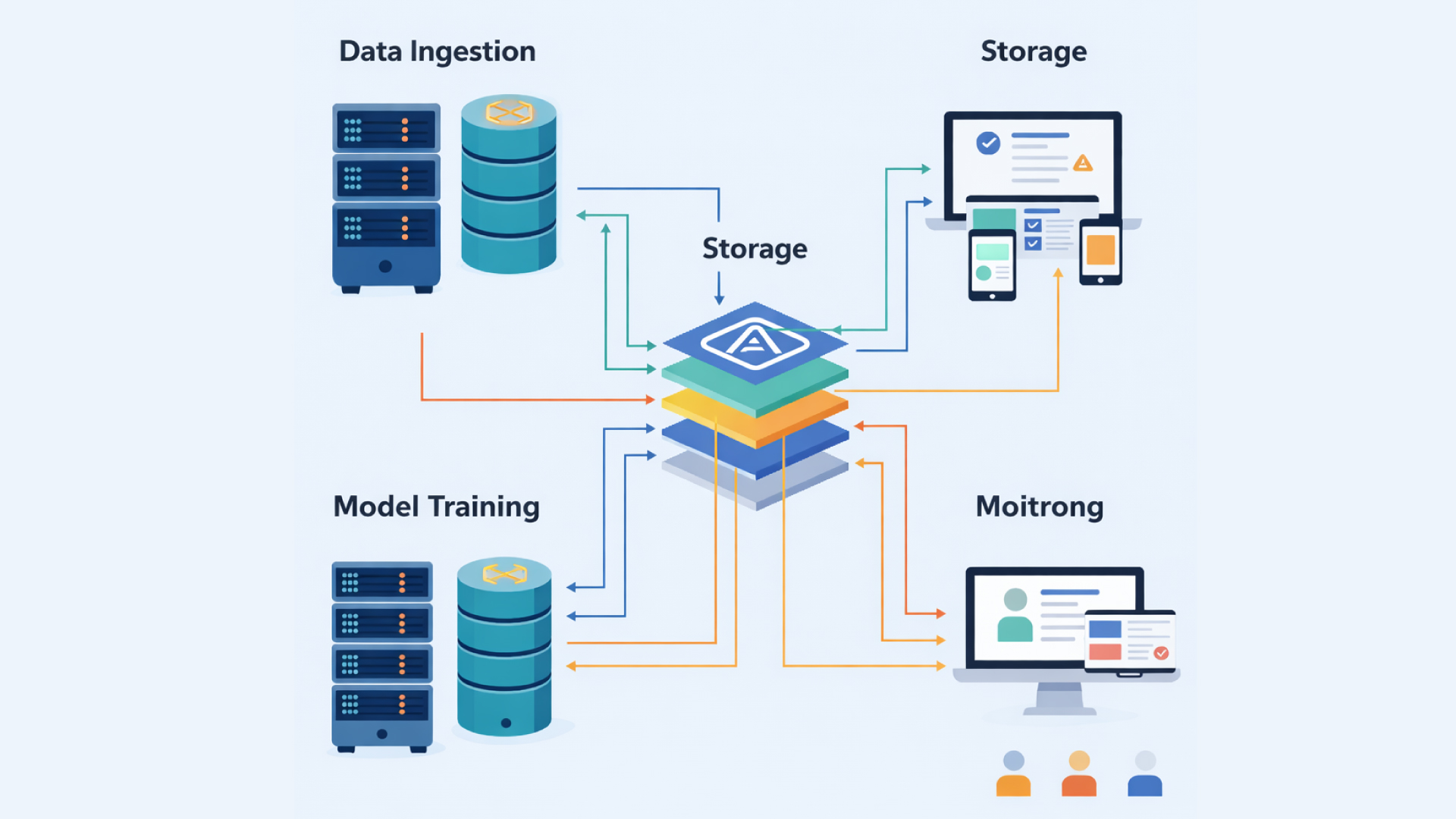
A more architecturally accurate model thinks of three interdependent system layers, each with distinct purposes and capabilities:
Layer 1: Systems of Record & Engagement
Purpose: Store core customer and transaction entities; execute day-to-day customer interactions
Primary tools:
Critical architectural principle: These systems must have:
Example data flow:
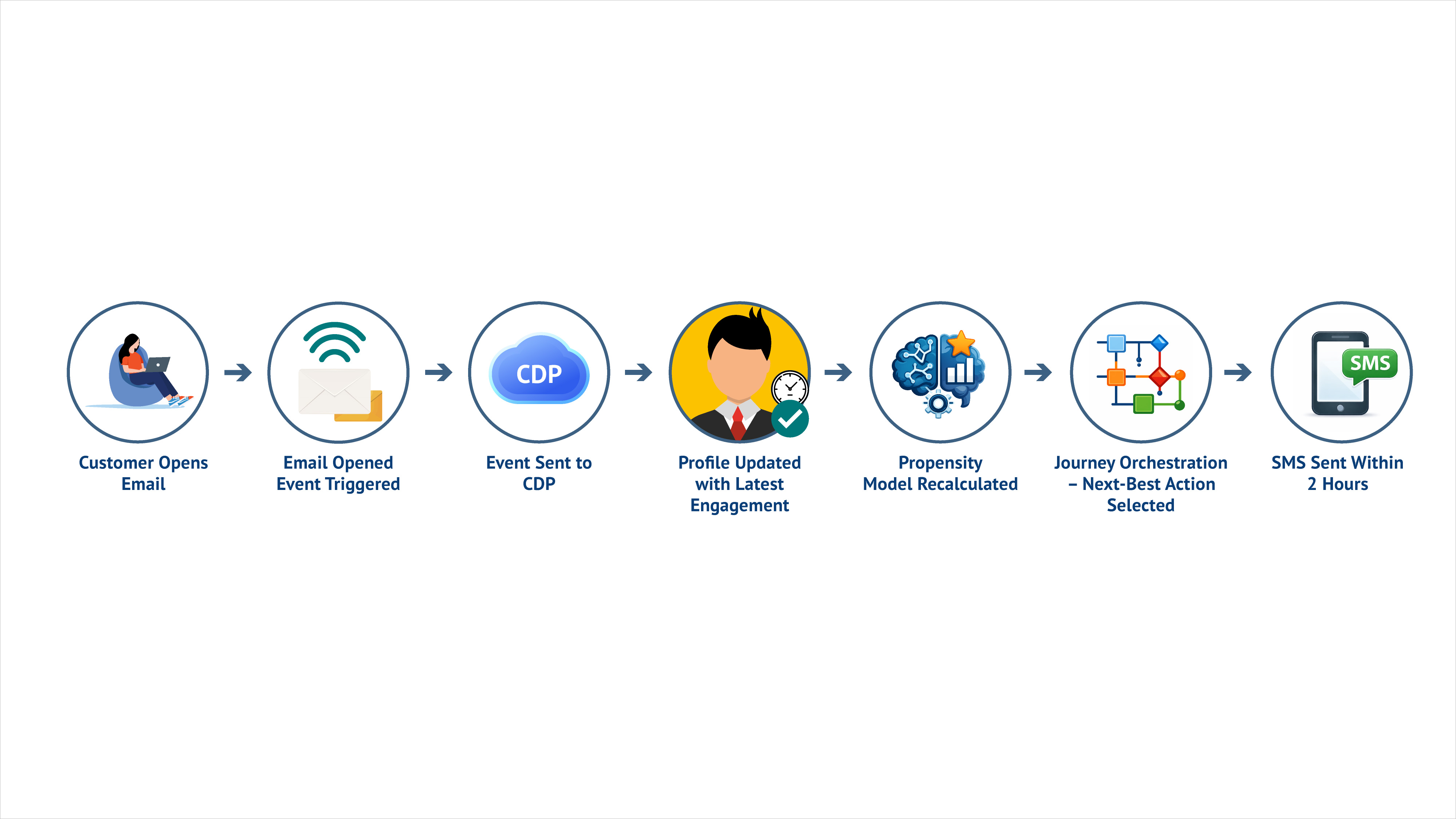
Customer opens email → email platform fires “email_opened” event → event flows to CDP → CDP updates profile with latest engagement timestamp → propensity model recalculates → journey orchestration adjusts next-best-action → SMS is sent within 2 hours
This entire flow might happen within minutes, enabling truly real-time personalization.
Layer 2: Systems of Insight & Coordination
Purpose: Unify fragmented customer data; derive intelligence through analytics and modeling; expose unified customer view and predictive scores to downstream systems
Primary tools:
Critical architectural principle: These systems must have:
Example data flow:
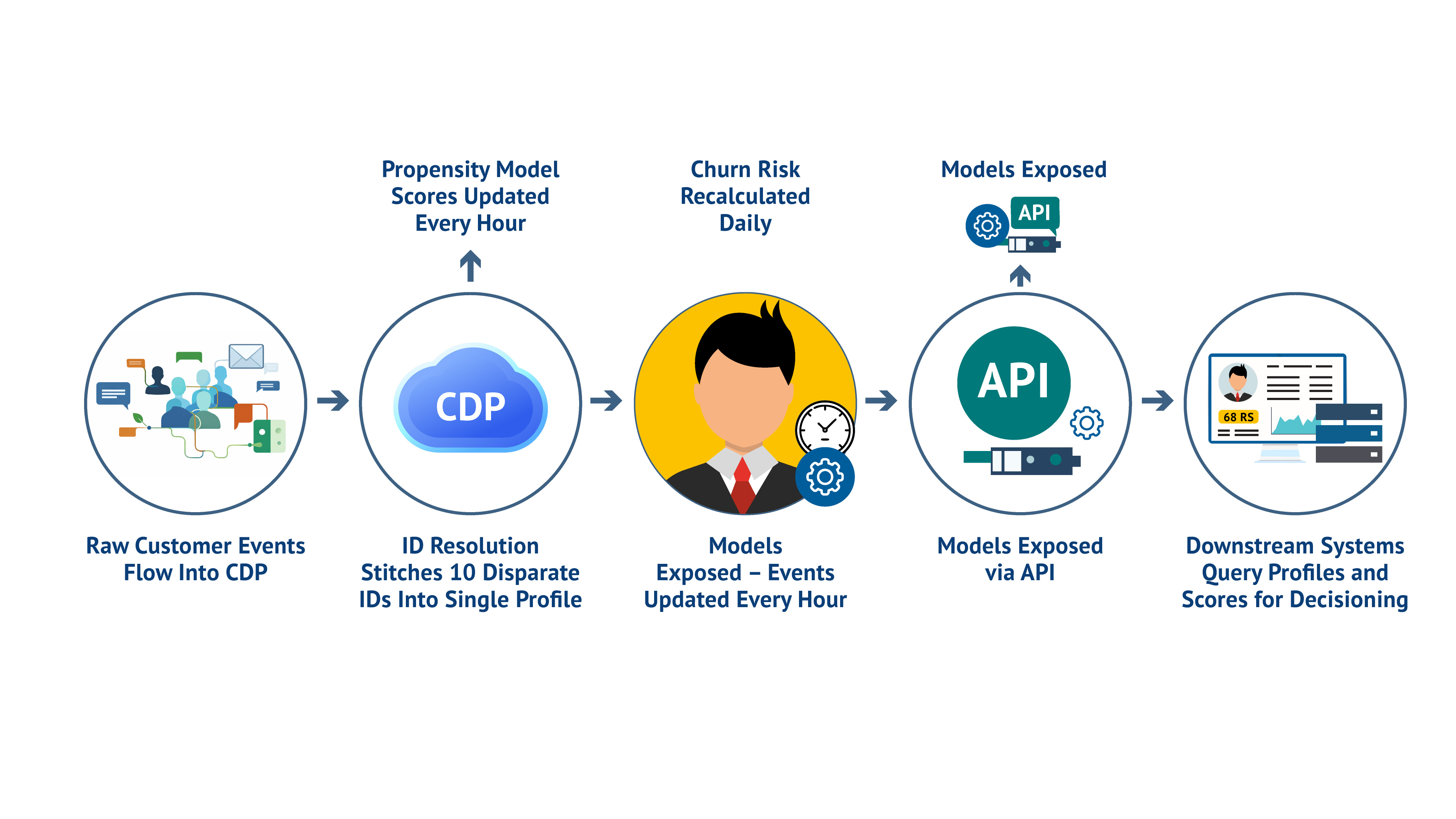
Raw customer events flow into CDP → identity resolution stitches 10 disparate IDs into single profile → propensity model scores updated every hour → churn risk recalculated daily → models exposed via API → downstream systems query profiles and scores for decisioning
Layer 3: System of Autonomy (Agent Layer)
Purpose: Make autonomous decisions within explicit guardrails; continuously learn from outcomes; act on customer profiles and model scores; manage orchestration and optimization
Primary tools:
Critical architectural principle: Agent architecture requires:
Agents must have clear boundaries: what data they can read (broadly), what actions they can take (narrowly), which human approvals are required (high-impact decisions)
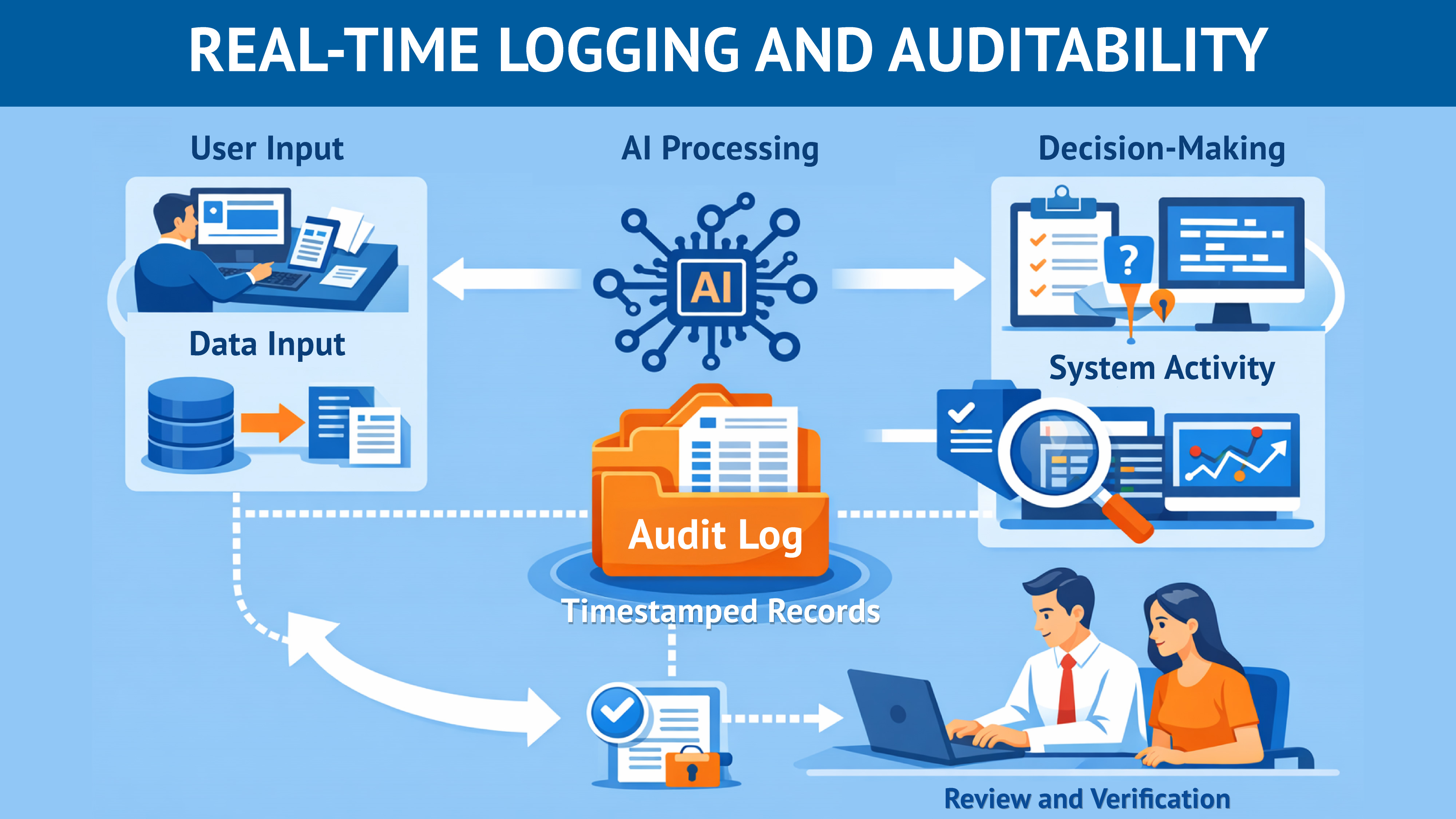
Every agent decision must be logged with full context: what decision, why, what was the outcome, how does this compare to baseline or human performance
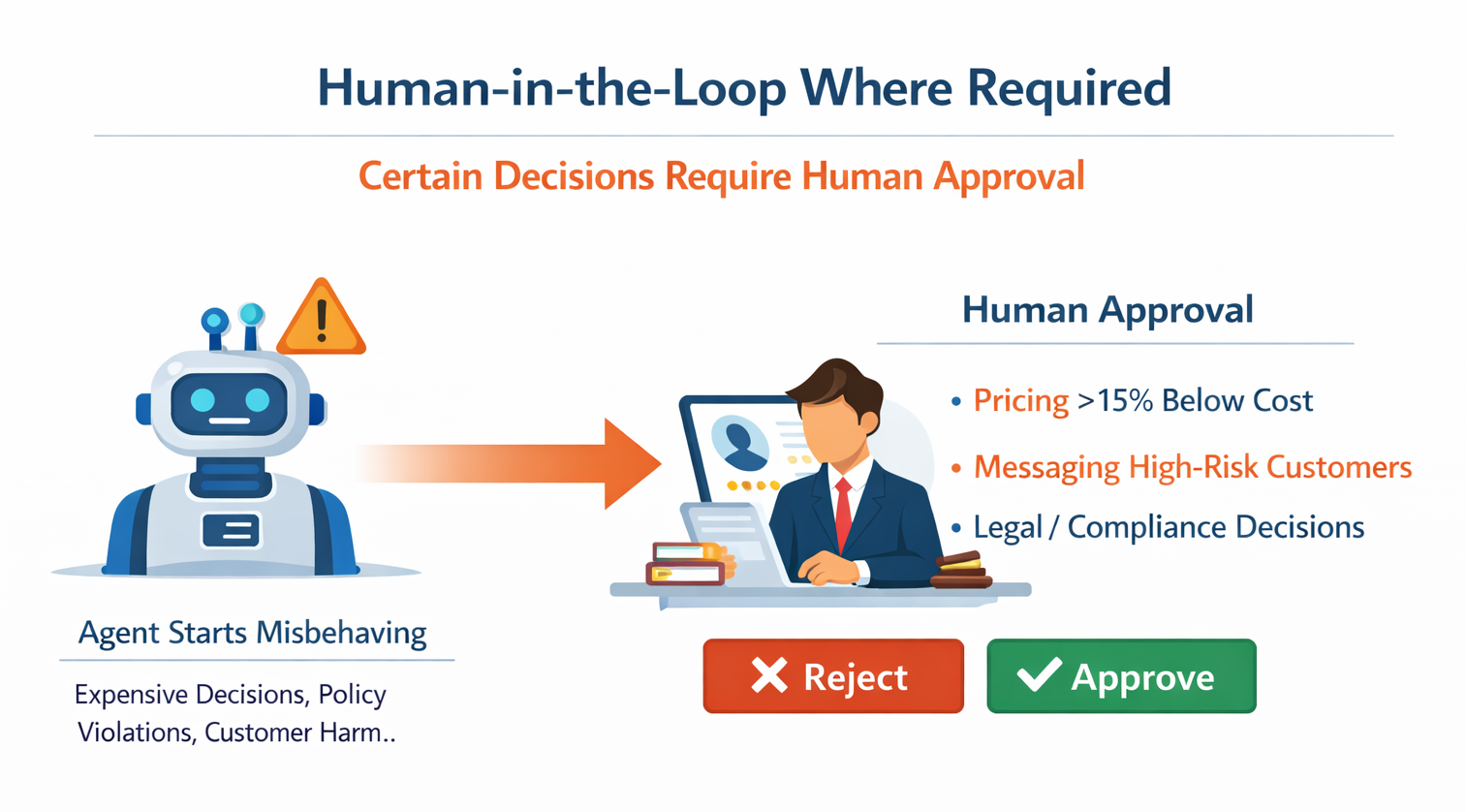
If an agent starts misbehaving (making expensive decisions, violating policies, harming customer experience), you must be able to disable it within minutes
Some decisions (pricing >15% below cost, messaging high-risk customers, legal/compliance decisions) require human approval
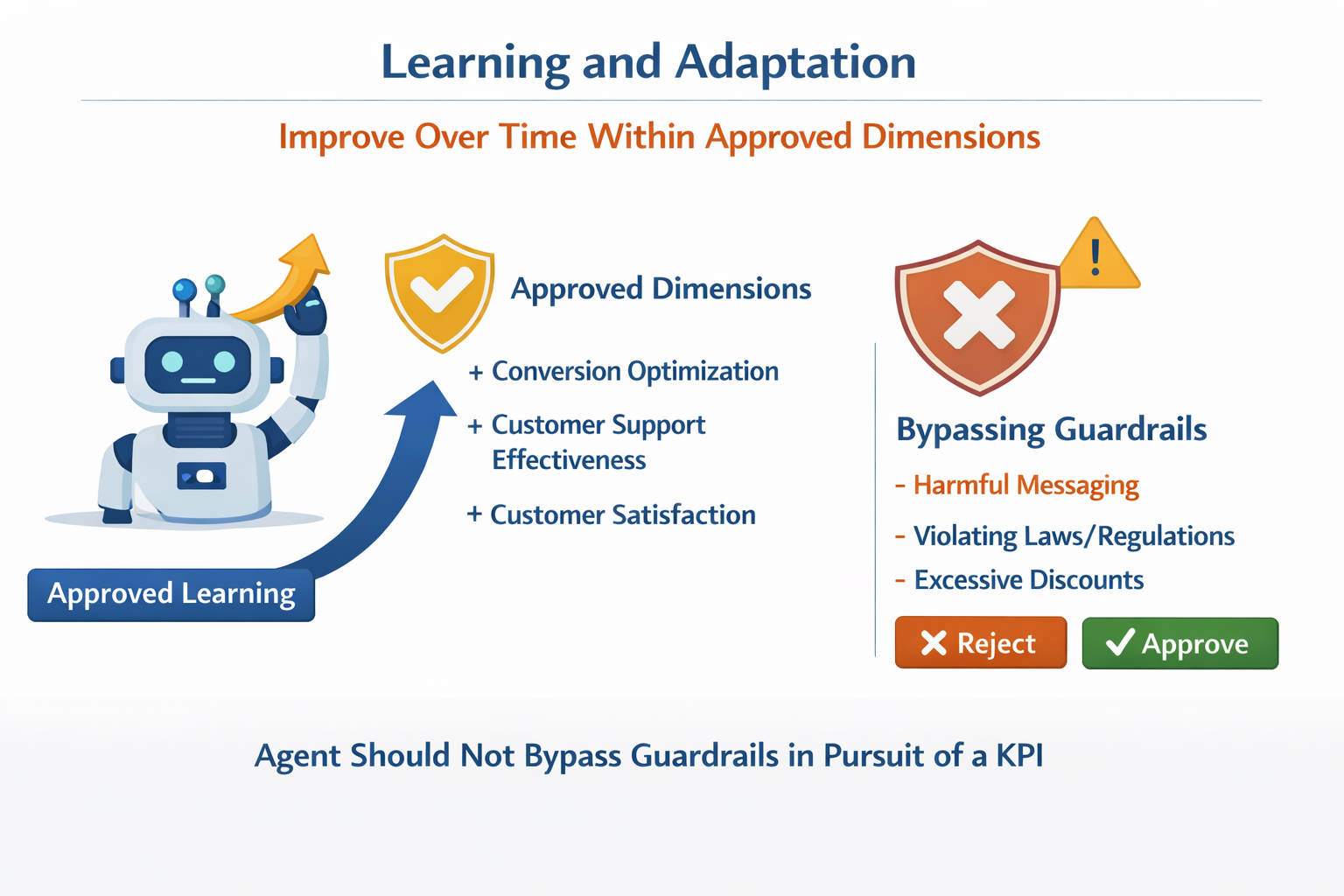
Agents should improve over time, but only on approved dimensions. An agent should not learn to bypass guardrails in pursuit of a KPI.
Example data flow:
Agent queries CDP for customer profiles and model scores → agent evaluates multiple decision options (which offer, which channel, which timing) within guardrail constraints → agent selects option estimated to maximize KPI (conversion, retention, margin) while respecting constraints → decision is logged with rationale → message is sent → outcome (open, click, conversion) is captured → feedback loop updates models for next decision
This entire flow can happen in milliseconds for real-time decisioning, or batch overnight for next-day messaging.
Mapping Platforms To Architectural Layers
Now that the three-layer model is clear, let’s map the specific platforms from your earlier analysis to these layers and show how they interact in agent-ready architecture.
Layer 1: Systems of Record & Engagement
Salesforce
Adobe Experience Cloud
Zoho CRM
MoEngage
CleverTap
LeadSquared
Netcore
Layer 2: Systems of Insight & Coordination
Salesforce Data Cloud
Adobe Real-Time CDP
Snowflake/ BigQuery
FirstHive (or equivalent India CDP)
Layer 3: System of Autonomy
Salesforce Agentforce
Adobe Copilot & Journey Optimizer AI
Custom Agent Frameworks
Architecture Pattern 1: The “WhatsApp Spine” Pattern For BFSI & Fintech
For Indian BFSI and fintech organizations, a particularly effective architecture has emerged. We call it the “WhatsApp Spine” pattern because WhatsApp and SMS have become the primary communication channels for customer engagement.
Layer 1 (Systems of Record & Engagement):
Layer 2 (Systems of Insight & Coordination):
Layer 3 (System of Autonomy):
Real example:
A large Indian NBFC implemented this pattern:
When a customer is identified as at-risk of defaulting on their loan, the agent:
This workflow—which would require manual work from 3-4 people if done manually—completes in seconds, applies consistent logic to all customers, and learns from outcomes.
Architectural advantages of this pattern:
Architecture Pattern 2: The “CDP-First Retailer” Pattern For D2C & Retail
For Indian D2C and retail organizations, a different architectural pattern works better. In these businesses, unified customer view across online and offline channels is critical—but real-time decisioning is less critical than rich segmentation and sophisticated journey orchestration.
Layer 1 (Systems of Record & Engagement):
Layer 2 (Systems of Insight & Coordination):
Layer 3 (System of Autonomy):
Real example:
A Tier-1 D2C beauty brand implemented this pattern:
They discovered that their customer base divides into three archetypes:
They configured agents to:
Agents dynamically adjust based on changing behavior: if a low-intent customer suddenly views 5 products, they transition to high-intent treatment; if a high-intent customer hasn’t engaged in 14 days, they receive a winback campaign.
Results:
Architectural advantages of this pattern:
Critical Architectural Decisions
Within the three-layer framework and the two patterns outlined, several architectural decisions require explicit deliberation:
Decision 1: Where is the “golden” source of truth?
One system should be designated as the authoritative customer profile. All other systems reference it. This prevents conflicting customer data from creating agent confusion.
Options:
For agentic architectures, the CDP-as-golden approach is typically superior because:
Decision 2: Where do agents live?
Three options:
Option 1: Native agents within platforms
Option 2: Centralized agent hub
Option 3: Hybrid
For Indian enterprises, Option 1 (native agents) is recommended for most cases because Salesforce and Adobe both offer comprehensive native agent capabilities with strong governance. As your needs grow beyond platform boundaries, you can add custom agents (Option 3).
Decision 3: How are guardrails implemented?
Guardrails are the explicit constraints within which agents must operate. They prevent agents from making expensive mistakes or violating policies.
Key guardrails to define:
Implementation approaches:
For agentic martech, hybrid is recommended: let agents move at speed on low-risk decisions, apply policy checks to high-impact decisions.
Decision 4: How are agents monitored?
Real-time monitoring of agent behavior is critical for catching misbehavior early and building organizational trust.
Key monitoring dimensions:
Monitoring should happen at multiple levels:
Mapping Platforms To Architecture: Reference Implementations
To make the architecture concrete, several reference implementations for common Indian enterprise scenarios:
Scenario 1: BFSI Retail Bank (500K – 5M customers)
Recommended architecture:
Implementation sequence:
Expected outcomes:
Scenario 2: D2C E-commerce (1M – 10M customers)
Recommended architecture:
Implementation sequence:
Expected outcomes:
Scenario 3: Fintech Platform (100K – 1M users)
Recommended architecture:
Implementation sequence:
Expected outcomes:
Conclusion: Architecture As Competitive Advantage
The organizations that will win in 2026 are not those with the “best” individual tools. They are organizations that have thought deeply about how data flows, where decisions happen, how humans and agents interact, and what governance ensures safety and compliance.
Your martech architecture in 2026 should be:
The architecture you choose now will determine your agility in 2026 and beyond. Choose carefully, with eyes wide open to both opportunity and risk.
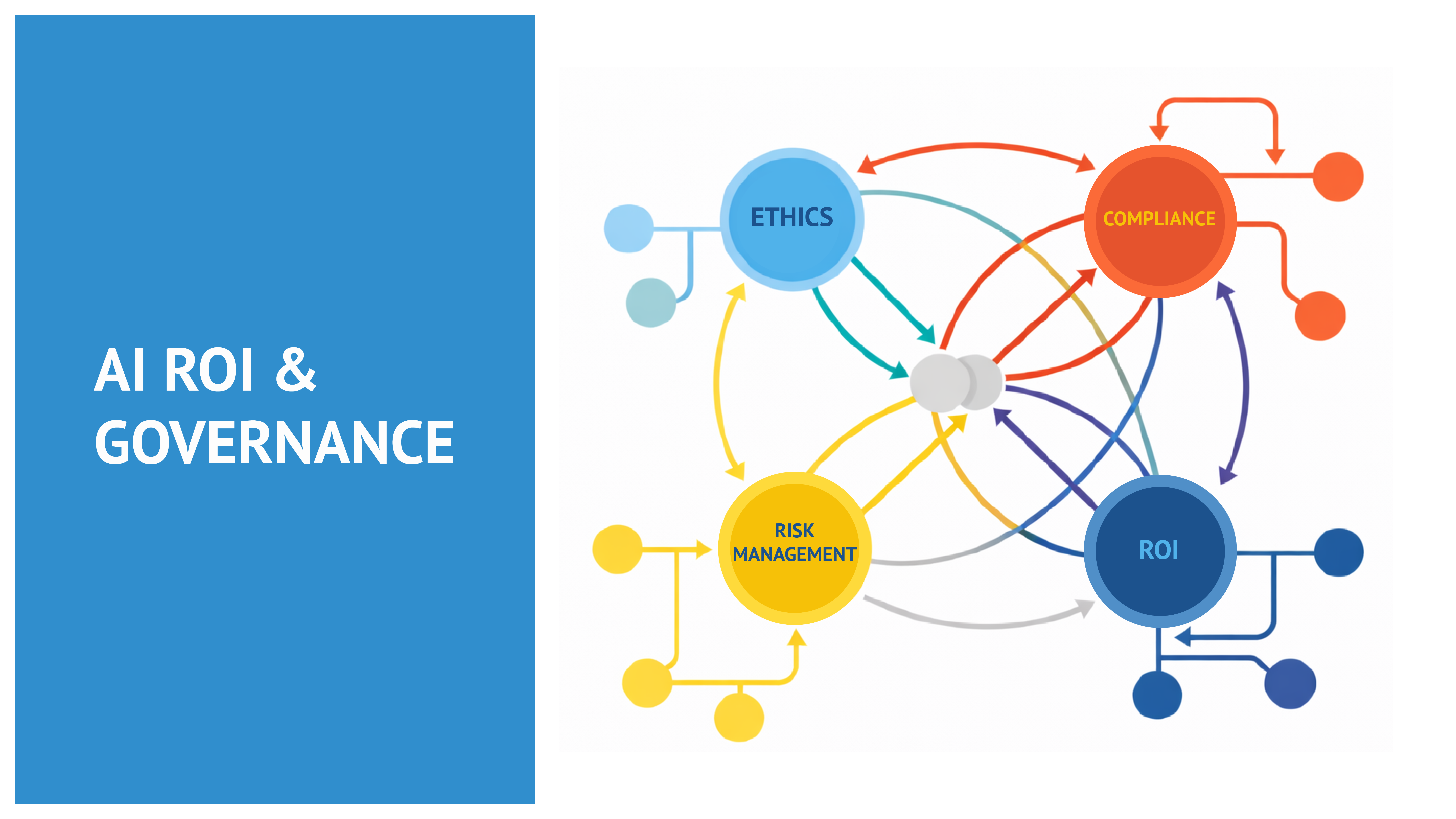
Agentic Martech For Indian Enterprises – Part 3: ROI & Governance
Beyond Dashboards: Closing The Martech ROI Gap In The Age Of AI Agents
The Core Challenge: Why Most Martech Investments Underdeliver
A pattern has emerged consistently across enterprise martech implementations, replicated across geographies and verticals: organizations invest significant capital in martech platforms, executives approve budgets based on compelling vendor pitches and case studies, implementations launch on schedule, and then—12-18 months later—executives ask uncomfortable questions.
“What exactly did we get for that ₹2 crore investment?”
“Our CMO said this platform would increase customer lifetime value by 30%. Our data shows 3%. What happened?”
“We deployed this CDP 18 months ago. How do I measure whether it was worth it?”
The research is consistent: 61% of CMOs report difficulty proving martech ROI despite 90% of C-suite believing best-in-class tools drive strategic value. That gap—between executive belief and documented business impact—is not because the tools are bad. It is because organizations failed to define ROI upfront, establish measurement discipline, and govern implementation for outcomes rather than features.
The introduction of AI agents amplifies this problem.
Why agents raise ROI stakes:
For Indian enterprises in BFSI, fintech, insurance, and healthcare, this risk is particularly acute. Regulators are watching. Customers are sensitive. A single AI misfire—discriminatory pricing, privacy violation, compliance breach—can trigger regulatory action, customer churn, and reputation damage.
This section is written for CFOs, audit committees, chief risk officers, and CMOs responsible for justifying AI investment and managing associated risks. It provides frameworks for:
The Three-Dimensional ROI Scorecard
Rather than treating martech as a single investment with a single ROI figure, organizations should evaluate across three interdependent dimensions. Together, they tell the full story of value creation and risk management.
Dimension 1: Revenue Impact
Definition: Incremental revenue generated through personalization, faster customer decisions, improved customer experience, and optimized journeys.
How to measure:
Organizations should establish baseline metrics before agents are introduced. For a given customer journey (e.g., onboarding, cross-sell, churn rescue), document current performance:
Then, introduce agents to a subset (60% treatment, 40% control) and track the same metrics for 60-90 days.
Calculate incremental lift:
Real-world benchmarks from global implementations:
For Indian enterprises:
A large fintech platform implemented personalized onboarding journeys using agents. They found:
Critical success factors:
Dimension 2: Operational Autonomy & Productivity Gains
Definition: Reduction in team effort required to achieve marketing outcomes; redeployment of talent from routine execution to strategic work; scalability without proportional headcount growth.
How to measure:
Organizations should conduct time-motion studies of critical marketing functions before and after agent implementation:
Example: Email campaign execution
Before agents (status quo):
After agents:
Multiply this across all campaigns run annually: 50 campaigns × 8 hours saved = 400 hours saved = 10 weeks of team capacity freed.
Converting to financial impact:
Real-world benchmarks from enterprise implementations:
For Indian enterprises:
A BFSI organization implemented lead scoring and routing agents for their mortgage business:
Before:
After:
Productivity gain: 280+ hours/week freed = 1.5 FTEs worth of capacity
Financial impact: 1.5 × ₹30 lakh = ₹45 lakh annual savings
But the real impact was redeployment: instead of cutting 3 people, the company reassigned them to:
These roles generated more value than pure lead routing.
Critical success factors:
Dimension 3: Risk, Compliance & Brand Protection
Definition: Incidents prevented through AI governance; regulatory violations averted; brand damage mitigated; customer trust maintained.
Why this matters:
Risk mitigation is the most undervalued dimension of AI ROI. A single preventable AI incident—a discriminatory decision, a privacy breach, a compliance violation—can cost millions in regulatory fines, customer churn, and reputation damage.
Yet organizations rarely quantify the value of prevention. They track revenue and productivity but not risks mitigated.
How to measure:
Example:
Track metrics:
Expected: In well-governed implementations, zero major incidents. If breaches occur, rapid detection and remediation.
For example:
Measure:
Organizations with visible AI governance and transparency often see improvements in these metrics compared to peers with opaque AI.
Real-world examples:
Insurance company incident:
An insurer’s AI agent was making renewal decisions and pricing adjustments. An audit revealed that the agent had learned to downgrade policy ratings for certain customer segments in ways that appeared discriminatory.
Because the system had complete audit trails:
Benchmark from global implementations:
Organizations with strong AI governance report:
For Indian enterprises:
In BFSI and regulated industries, risk mitigation is not a cost center—it is a competitive advantage. Organizations that can credibly say “our AI is governed and auditable” will attract customers from competitors who cannot.
Building The AI/ Agent Council: Governance In Practice
Strategy and ROI frameworks are important, but they remain abstract without a governance structure to execute them.
Leading organizations are establishing AI/Agent Councils as the central governance body for agentic martech. This council is distinct from traditional steering committees. It has real authority, meets regularly, owns decisions, and is accountable for outcomes.
Composition:
Cadence:
Responsibilities:
Council reviews proposals using standardized framework:
Only after this review should agent development begin.
For each deployed agent, the council documents:
This documentation lives in a “policy library” that agents reference at decision time.
Example guardrail document:
Agent: Offer Optimization (E-commerce Onboarding)
ALLOWED ACTIONS:
PROHIBITED ACTIONS:
GUARDRAILS:
ESCALATION:
Council reviews weekly dashboards showing:
If agent performance degrades or violations spike, council can:
Council oversees organizational learning:
Council ensures that investment in people matches investment in technology.
Example: Why governance matters
A BFSI organization deployed churn prediction agents without proper governance:
With proper governance:
The 12-Month ROI and Governance Roadmap
For a CFO evaluating a ₹2-5 crore Martech/ AI investment, here is a realistic timeline for seeing ROI and achieving governance maturity:
Quarter 1: Foundation
Quarter 2: Pilot
Quarter 3-4: Validation
Quarter 5-6: Expansion
Quarter 7-8: Optimization
Year 2: Continuous Learning
Consolidated ROI over 24 months:
For a ₹3 crore investment:
| Dimension | Year 1 | Year 2 | Cumulative |
| Revenue impact | ₹2-3 crore | ₹5-8 crore | ₹7-11 crore |
| Productivity gains | ₹50 lakh | ₹75 lakh | ₹1.25 crore |
| Risk mitigation | ₹2-5 crore (prevented) | ₹2-5 crore (prevented) | ₹4-10 crore (prevented) |
| Cumulative benefit | ₹2.5-8.5 crore | ₹7.75-13.75 crore | ₹10.25-22.25 crore |
| ROI | -15% to +185% | +155% to +358% | +242% to +641% |
Even conservative assumptions yield 2-4x ROI by end of Year 2. Optimistic scenarios yield 6x+
Critical Success Factors For ROI Realization
Organizations achieving strong ROI from martech and AI investments share common traits:
Organizations without clear executive owner predictably miss timelines and underdeliver ROI.
The difference between success and failure is often just the discipline to measure correctly.
Pressure for immediate ROI leads to corner-cutting (skipping governance, deploying prematurely) that creates long-term liability.
Organizations that position governance as a cost see slow adoption. Organizations that position it as enabling innovation see teams embrace it.
The best platform fails if teams don’t know how to use it.
Conclusion: ROI As Strategic Lens
The fundamental insight is this: ROI in agentic Martech is not about the technology. It is about governance discipline, measurement rigor, and organizational readiness.
Organizations that define ROI clearly, measure it rigorously, and govern intelligently to manage risk realize 2-6x returns on investment. Organizations that deploy technology without this discipline predictably fail to realize projected benefits.
For CXOs and boards evaluating Martech and AI investments, the question is not “Does this technology work?” (It does, as evidenced by case studies globally.) The question is “Is our organization ready to execute with discipline?”
If the answer is yes—you have executive ownership, measurement discipline, governance structure, and talent investment—deploy confidently. The ROI follows.
Choosing Martech Platforms In 2026: A Buy‑Guide For Indian CX Leaders
The Real Platform Question
Martech platform selection conversations traditionally center on features: “Does this platform have SMS? Does it support WhatsApp? What is the price per thousand emails?”
In 2026, those conversations need to evolve. The question is no longer “Which platform has the features we need?” It is “Which platform will enable us to build an intelligent growth system that agents can operate within safely?”
This shift changes the decision calculus fundamentally. A platform might have technically superior email features but terrible agent integration, API availability, and governance controls. Another platform might have modest feature breadth but exceptional architecture for agent-driven decisioning.
This section is written for CXOs and technology leaders running a platform selection process—either a greenfield implementation or a migration from legacy systems. It provides:
Strategic Priorities: Start Here
Before evaluating any platform, clarify your strategic priority. Different organizations need different platforms.
Priority 1: Revenue Growth Through Personalization
Definition: Competitive advantage comes from understanding customers better and personalizing their experience at scale. Investment priority: understanding behavior, predicting intent, optimizing messages and offers.
What you’re solving for:
Recommended platforms:
Example organizations: Starbucks (using personalized offers to drive $2.56B mobile revenue), D2C brands, fintech platforms
Priority 2: Complex B2B Sales Cycles
Definition: Competitive advantage comes from accelerating sales cycles and improving qualification of prospects. Investment priority: lead routing, opportunity management, sales process discipline.
What you’re solving for:
Recommended platforms:
Example organizations: Enterprise software vendors, financial services advisory, complex B2B services
Priority 3: Enterprise Data Integration
Definition: Competitive advantage comes from unified customer view across siloed systems. Investment priority: identity resolution, data quality, unified profiles.
What you’re solving for:
Recommended platforms:
Example organizations: Large retailers with physical + online, financial services with multiple brands, multinational organizations
Priority 4: Regulated Industry Compliance
Definition: Competitive advantage comes from demonstrating trustworthy, auditable, compliant operations. Investment priority: audit trails, consent management, policy enforcement.
What you’re solving for:
Recommended platforms:
Example organizations: Banks, insurance companies, financial services, healthcare
Priority 5: Mid-Market Cost Efficiency
Definition: Rapid time-to-value with minimal complexity and cost. Investment priority: ease of implementation, local support, affordability.
What you’re solving for:
Recommended platforms:
Example organizations: Growing BFSI branches, D2C startups, mid-market retailers
Priority 6: High-Volume Transactional Reliability
Definition: Competitive advantage comes from reliable, scalable infrastructure for billions of messages. Investment priority: infrastructure excellence, delivery guarantees, compliance automation.
What you’re solving for:
Recommended platforms:
Example organizations: Large fintech, BFSI, high-volume e-commerce
Two New Evaluation Filters: Agent Readiness & India Alignment
Once you’ve identified strategic priority, apply two additional filters: agentic readiness and India stack alignment.
Filter 1: Agentic Readiness
This lens evaluates how well each platform supports AI agents: natively, through APIs, with governance controls.
Key criteria:
| Salesforce | ✓ | Agentforce (handling 32,000 conversations/week, 83% resolution) |
| Adobe | ✓ | Journey Optimizer AI + Copilot |
| Zoho | ✓ | Zia (embedded throughout CRM) |
| MoEngage | ✓ | AI-driven optimization (send time, channel, path) |
| CleverTap | ✓ | Behavioral AI (scoring, segmentation) |
| LeadSquared | ⚠ | Limited (scoring and automation, not full agents) |
| Netcore | ✓ | MCP Server support for agent orchestration |
| Salesforce | ✓✓ | 10,000+ APIs, developer ecosystem |
| Adobe | ✓✓ | comprehensive REST APIs, RT-CDP, streaming |
| Zoho | ✓ | good APIs, mid-market maturity |
| MoEngage | ✓ | APIs for integration and data access |
| CleverTap | ✓ | APIs for events, profiles, journeys |
| LeadSquared | ✓ | CRM APIs for custom integration |
| Netcore | ✓ | MCP + messaging APIs |
| Salesforce | ✓✓ | comprehensive logging, role-based access, policy engine |
| Adobe | ✓ | audit trails, role-based controls |
| Zoho | ✓ | audit logs, permission framework |
| MoEngage | ⚠ | basic logging, limited policy controls |
| CleverTap | ⚠ | event logging, limited policy framework |
| LeadSquared | ⚠ | activity logs, limited agent governance |
| Netcore | ✓ | transaction logging for compliance |
| Salesforce | ✓✓ | quarterly releases, Agentforce becoming central |
| Adobe | ✓✓ | aggressive RT-CDP evolution, Sensei integration |
| Zoho | ✓ | steady Zia expansion, quarterly releases |
| MoEngage | ✓ | AI optimization continuous |
| CleverTap | ✓ | behavioral AI core to roadmap |
| LeadSquared | ⚠ | modest AI roadmap |
| Netcore | ✓ | MCP and agentic compatibility new |
Filter 2: India Stack Alignment
This lens evaluates how well each platform serves Indian market realities.
Key criteria:
| Salesforce | ✓ | India data centers available, DPDP-ready |
| Adobe | ✓ | India data centers available |
| Zoho | ✓✓ | India-native, data residency built in |
| MoEngage | ✓✓ | India-first, data in India |
| CleverTap | ✓✓ | India operations, data residency standard |
| LeadSquared | ✓✓ | India-native, data in India |
| Netcore | ✓✓ | India-only, regulatory-grade compliance |
| Salesforce | ✓ | WhatsApp support via partners |
| Adobe | ✓ | WhatsApp via partners |
| Zoho | ✓ | native SMS, WhatsApp integration |
| MoEngage | ✓✓ | processes billions of WhatsApp messages |
| CleverTap | ✓✓ | WhatsApp optimized for India |
| LeadSquared | ⚠ | SMS/email, limited WhatsApp |
| Netcore | ✓✓ | 9% better WhatsApp delivery than competitors |
| Zoho | ✓✓ | native multi-language |
| LeadSquared | ✓ | supports Hindi, regional languages |
| MoEngage | ✓ | vernacular support in journeys |
| Salesforce | ⚠ | limited vernacular; partner-dependent |
| Adobe | ⚠ | limited vernacular; partner-dependent |
| CleverTap | ⚠ | primarily English, event-based |
| Netcore | ✓ | SMS/WhatsApp in regional languages |
| Zoho | ✓✓ | native UPI, NEFT, Indian payment processors |
| Netcore | ✓ | UPI integration |
| LeadSquared | ✓ | payment gateway options |
| MoEngage | ✓ | payment integration via partners |
| Salesforce | ⚠ | partner-dependent |
| Adobe | ⚠ | partner-dependent |
| CleverTap | ⚠ | limited native payment integration |
| Zoho | ✓✓ | strong India support, extensive partner ecosystem |
| LeadSquared | ✓✓ | India-centric, deep BFSI partnerships |
| Netcore | ✓✓ | India operations, BFSI specialists |
| MoEngage | ✓✓ | India headquarters, deep market expertise |
| CleverTap | ✓✓ | India operations, D2C/fintech specialists |
| Salesforce | ✓ | strong India presence, global partner network |
| Adobe | ✓ | India presence, global partner network |
Platform Choice Matrix: Combining Filters
For each strategic priority, the optimal platform emerges when you combine agentic readiness and India alignment:
Scenario 1: BFSI / Fintech (Priority 4: Compliance + Priority 2: Sales)
Agentic readiness critical: You want agents managing risk scoring, offer decisioning, sales process
India alignment critical: You need DPDP compliance, WhatsApp integration, local support
Recommendation:
Timeline: 6-9 months implementation; agents active by month 9-12
Scenario 2: D2C E-commerce (Priority 1: Personalization + Priority 5: Cost)
Agentic readiness important: You want journey agents optimizing offers and channels
India alignment critical: You need WhatsApp, fast deployment, cost-effective
Recommendation:
Timeline: 3-4 months implementation; agents active by month 4-6
Scenario 3: Enterprise Multi-brand (Priority 3: Data Integration + Priority 1: Personalization)
Agentic readiness critical: You want agents orchestrating across brand boundaries
India alignment important: You need data residency for Indian operations
Recommendation:
Timeline: 12-18 months implementation; phased agent rollout starting month 9
The Buy Decision Process
Traditional RFP processes (150-page requirement documents, feature checklists, blind scoring) often lead to poor platform choices.
A more effective approach is design-led buying: work with vendors to demonstrate how they would solve your specific problems, within your specific constraints.
Step 1: Shortlist (weeks 1-2)
Based on strategic priority + agentic readiness + India alignment, narrow to 2-3 platforms.
Example: For BFSI organization, shortlist would be:
Step 2: Discovery Workshops (weeks 3-4)
Run 4-6 hour workshops with each vendor. Agenda:
Step 3: Pilot or POC (weeks 5-8)
Select one platform. Run focused pilot:
This pilot de-risks the full deployment decision. If pilot performs well, full deployment follows. If pilot underperforms, you can pivot.
Step 4: Reference Calls (weeks 6-9)
Call 3-5 customer references for each shortlisted platform:
Step 5: Negotiate and Close (weeks 10-12)
For winning platform:
Reference Architectures
To make platform choice concrete, here are three reference architectures for common Indian scenarios:
Reference 1: Mid-Market BFSI (₹200Cr – ₹500Cr)
Strategic priorities: Loan/deposit growth, compliance, cost control
Recommended stack:
Implementation timeline:
Investment: ₹65-90L year 1; ₹40-50L annually ongoing
Expected ROI: 120-200% year 1; 300%+ year 2
Reference 2: D2C E-commerce (₹50Cr – ₹200Cr)
Strategic priorities: Conversion, retention, unit economics
Recommended stack:
Implementation timeline:
Investment: ₹70-105L year 1; ₹50-60L annually ongoing
Expected ROI: 150-250% year 1; 350%+ year 2
Reference 3: Large Enterprise (₹1000Cr+)
Strategic priorities: Enterprise governance, data unification, global coordination, India compliance
Recommended stack:
Implementation timeline:
Investment: ₹2-3Cr year 1; ₹1.5-2Cr annually ongoing
Expected ROI: 50-150% year 1; 250%+ year 2 (gains compound)
Closing: Platform as Enabler, Not Solution
The final insight: Your platform choice is important, but it is not the determinant of success.
Organizations with the best platforms but weak governance, unclear ROI measurement, and poor organizational readiness fail. Organizations with mid-tier platforms but strong execution discipline, clear strategic focus, and committed leadership succeed.
Choose the platform that best fits your strategic priority, has strong agent readiness, and aligns with India context. But invest at least as much in governance, measurement, capability building, and change management as you do in platform selection.
The platforms are good. The organizations that implement them with discipline will win.
Agentic Martech For Indian Enterprises
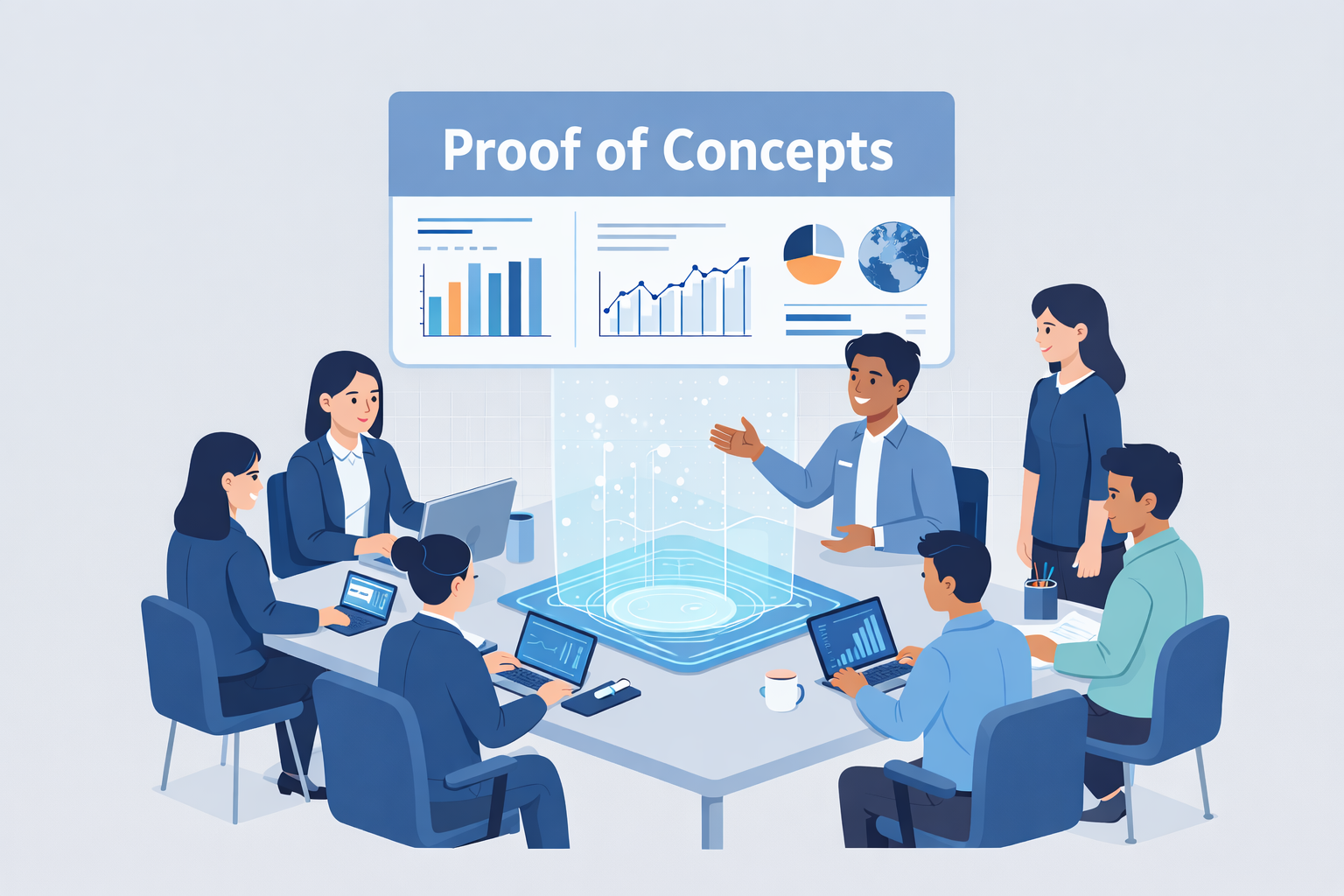
From POCs To Production Agents: A 12–18 Month Execution Playbook For CXOs
This section is written for CMOs, CDOs, CIOs, and program managers responsible for actually making agentic martech real inside their organizations.
The POC Purgatory Problem: Why Most AI Initiatives Fail
Walk into any Fortune 500 company in India, and you will find dozens of “AI pilots” that have been running for 9-18 months without reaching production.
The pattern is predictable:
Months 1-3: Executive approval, vendor selection, initial hype. Beautiful demo in a steering committee.
Months 3-6: Pilot launches. Early results are promising. Team is excited.
Months 6-9: Data quality issues emerge. Team struggles with implementation complexity. First doubts appear.
Months 9-12: Pilot still running but not scaled. Organization becomes distracted by next shiny initiative. Momentum fades.
Month 13+: Pilot quietly shut down or runs indefinitely without driving business impact. Investment is written off as “learning.”
This is not because the technology is bad. It is not because the vendors are incompetent. It is because the organization tried to do too much too fast, without the foundational discipline required to move from pilot to production.
The organizations succeeding at production-scale AI implementations follow a disciplined four-phase playbook that:
Phase 1: Stabilise The Data (Months 0–3)
Core principle: You cannot deploy agents with confidence on fragmented or untrusted data. Fix the foundation first.
Why this matters:
Every agent decision is only as good as the data it consumes. If your CDP has:
Then agents will make decisions on incomplete, stale, or incorrect information. The results will be poor, and the organization will lose confidence in AI.
Conversely, if you invest 3 months upfront in data foundation, you build organizational confidence that agents can operate safely. The investment pays dividends for years.
Key actions in Phase 1:
Action 1: Conduct a pragmatic data audit (2 weeks)
Focus on 3-5 critical customer journeys, not the entire enterprise:
Onboarding journey: Can you track a customer from first touch through account activation?
Cross-sell journey: Can you identify which customers are ready to buy which products?
Churn rescue journey: Can you identify at-risk customers and intervene?
For each journey, document:
Action 2: Clarify identity resolution (1 week)
The fundamental question: When a customer appears in 10 different systems with 10 different IDs, how does your organization stitch them together into a single customer profile?
Map this out:
How do these reconcile? Is there a single identity resolution service? Or does each system maintain its own mapping?
Identity resolution challenges in India:
Document:
Action 3: Implement or strengthen consent and preference management (2 weeks)
In a DPDP and sectoral-regulation world, consent is non-negotiable.
Set up systems to:
For agents: consent data flows into agent decisions. Agent cannot send email to opted-out customer. If agent tries, guardrail blocks it. Violation is logged.
Action 4: Choose or validate the primary customer data hub (1 week)
One system should be designated as the “system of record” for customer profiles. All other systems reference it.
Options:
For agentic architectures, CDP is typically superior because:
Whichever you choose:
Success metrics for Phase 1:
Common mistakes in Phase 1:
Phase 2: Instrument The Journeys (Months 3–6)
Core principle: Before agents optimize journeys, humans must fully understand how journeys work today. Instrumentation reveals that understanding.
Why this matters:
Optimization without understanding is dangerous. If you let an agent optimize a journey without first understanding baseline performance, drop-off points, and success factors, the agent will learn to optimize the wrong thing.
Phase 2 is about defining the playing field on which agents will later compete.
Key actions in Phase 2:
Action 1: Select 3–5 critical journeys (1 week)
Choose journeys that:
Examples:
Pick one or two where performance is already good (you want early wins), and one where performance is sub-optimal (big improvement opportunity).
Action 2: Map journeys end-to-end (2 weeks)
For each journey, create a detailed map:
Touchpoint inventory:
State transitions:
Decision points:
Drop-off points:
Example: D2C product journey
text
START
├─ Browse product page (device: mobile/web, session duration, products viewed)
│ └─ Convert to view product
│ ├─ [DECISION POINT 1: Is this customer high-intent?]
│ │ (Propensity score, past purchase history, current session engagement)
│ └─ Show dynamic offer?
│ ├─ YES: Show 15% offer (high-intent path)
│ └─ NO: Show “back in stock” notification (low-intent path)
│
├─ Add to cart (cart abandonment signal)
│ └─ [DECISION POINT 2: Is cart at risk of abandonment?]
│ (Conversion likelihood, time spent on cart, customer LTV)
│ ├─ YES: Send “complete your purchase” message within 2 hours
│ └─ NO: Let customer continue
│
├─ Checkout (form complexity, payment options, fraud check)
│ └─ Purchase (revenue recorded, customer status updated)
│
└─ Post-purchase (order confirmation, delivery tracking, repeat offer)
Map all three journeys you selected with similar rigor.
Action 3: Establish baseline performance (1 week)
For each journey, measure current performance using historical data:
Metrics:
Example metrics for D2C beauty:
These become the control group baseline against which Phase 3 agents will be measured.
Action 4: Configure baseline journeys in engagement tools (2 weeks)
Build the current-state journey in your engagement platform (Salesforce, MoEngage, CleverTap, etc.):
Goal: By end of Phase 2, you have:
This baseline becomes the control group for Phase 3 experiments.
Success metrics for Phase 2:
Phase 3: Introduce Smart Autopilot (Months 6–12)
Core principle: Start with low-risk decisions that agents can make safely. Prove value with rigorous measurement. Expand only when evidence is clear.
Why this matters:
This is where agents enter production for the first time. Getting this right builds organizational confidence and momentum. Getting it wrong destroys confidence and derails the entire program.
The key is starting small and low-risk, so early successes build confidence rather than failures eroding it.
Key actions in Phase 3:
Action 1: Deploy predictive models and integrate into CDP (4 weeks)
Start with three foundational models:
Model 1: Churn/ Risk prediction
Model 2: Propensity/ Conversion prediction
Model 3: Next-best-product prediction
Integration:
Action 2: Let agents control low-risk decision levers (6 weeks)
DO NOT let agents make high-stakes decisions yet (pricing, major discounts, targeting). Instead, let them control:
Lever 1: Send time optimization
Lever 2: Channel selection
Lever 3: Message variant selection
Implementation:
Action 3: Deploy campaign-ops agents (6 weeks)
These agents don’t interact with customers—they manage marketing machinery:
Agent 1: Performance monitor
Agent 2: A/B test manager
Agent 3: Anomaly detector
These agents reduce manual work and catch issues early.
Action 4: Implement rigorous control groups and holdouts (ongoing)
This is non-negotiable. You cannot measure agent value without comparing against baseline:
Experimental design:
Example result:
This becomes the evidence for Phase 4 expansion.
Action 5: Maintain strict governance (ongoing)
Success metrics for Phase 3:
Common mistakes in Phase 3:
Phase 4: Scale Autonomous Agents (Year 2 Onwards)
Core principle: Only expand agent scope when Phase 3 success is proven, governance is mature, and team is confident. Scale with discipline, not excitement.
Why this matters:
This is where the real value is created. Phase 1-3 have proven feasibility and value. Phase 4 is where that value compounds across the customer base and across use cases.
But Phase 4 is also where things can go wrong at scale. An agent making a good decision for 10% of customers becomes a problem if it makes a bad decision for 100% of customers.
Disciplined scaling is essential.
Key actions in Phase 4:
Action 1: Expand to 100% of customers for validated use cases (weeks 1-4)
Roll out agent-optimized journeys from Phase 3 to all customers:
Expected outcome: Phase 3’s 15-30% uplift extends to full customer base.
Action 2: Extend to new use cases (weeks 5-12)
Extend agent optimization to 2-3 new journeys following same discipline:
Use case examples:
Use case 1: Cross-sell optimization
Use case 2: Churn rescue
Use case 3: Welcome series optimization
Each use case follows the same discipline: prove in Phase 3 before scaling in Phase 4.
Action 3: Introduce specialized agents with clear ownership (weeks 13-24)
Move beyond single “universal agent” to role-specific agents:
Agent 1: Onboarding agent
Agent 2: Churn protection agent
Agent 3: Cross-sell agent
Agent 4: Offer optimization agent
Each agent has:
This moves away from “one magic agent” to a “marketing team that happens to include agents.”
Action 4: Embed agents into everyday tools (weeks 25-52)
Integrate agents into tools that marketers, sales, and service teams use daily:
For marketers:
For sales teams:
For service teams:
For finance/leadership:
This embedment makes agents “business as usual” rather than “special AI project.”
Action 5: Mature governance into continuous optimization (ongoing)
In Phase 1-3, governance was reactive (monitoring for problems). In Phase 4, governance becomes proactive (continuously optimizing for better outcomes).
Governance evolution:
Governance is no longer a cost center—it is an enabler of agent velocity and confidence.
Success metrics for Phase 4:
Organizational Readiness: The Real Success Factor
Technology and phases matter, but organizational readiness is the true determinant of success.
Organizations with high readiness move from POC to production in 12-18 months. Organizations with low readiness get stuck in pilot purgatory.
Assess your organization across four dimensions:
Measure:
High readiness (8-10): Can support real-time agents making thousands of decisions/day
Medium readiness (5-7): Can support agents on less time-critical use cases
Low readiness (<5): Must invest 6-12 months in data foundation before agents
Measure:
High readiness (8-10): Team eager to work with agents; quickly develops AI fluency
Medium readiness (5-7): Team cautious but willing; learns over time
Low readiness (<5): Team resistant or lacking technical foundation; requires significant training
Measure:
High readiness (8-10): Executives committed; will sponsor difficult decisions and maintain investment
Medium readiness (5-7): Executives supportive but impatient; may pressure for early ROI
Low readiness (<5): Executives skeptical or distracted; likely to defund if quick wins don’t materialize
Measure:
High readiness (8-10): Infrastructure enables rapid agent iteration
Medium readiness (5-7): Infrastructure adequate but requires some custom work
Low readiness (<5): Infrastructure siloed; significant custom integration required
Readiness scoring:
For most organizations, readiness is 18-26. This is fine. You don’t need perfect readiness to start. You need commitment to improve readiness during Phase 1-2 while building foundational data and governance.
12-Month Timeline: Realistic Expectations
Here is a realistic timeline for organizations with medium readiness (24-30):
Months 1-3: Phase 1 (Data Foundation)
Months 3-6: Phase 2 (Journey Instrumentation)
Months 6-12: Phase 3 (Smart Autopilot)
Months 12-18: Phase 4 (Scale and Specialization)
Total 18-month investment: ₹170-260L
Expected outcomes:
Even conservative scenarios yield 2-4x return on investment.
Closing: From POCs To Real Value
The organizations winning with agentic AI in 2026 are not those with the most sophisticated AI. They are organizations with:
With these elements, agentic martech delivers extraordinary business value—25-60% uplift in key metrics, 25-40% productivity gains, 2-6x ROI within 18-24 months.
Without these elements, agentic martech becomes another ₹2 crore pilot that fails to reach production and becomes a lesson in overhyped AI.
The choice is yours. Choose discipline over excitement, foundation over features, governance over innovation. The value will follow.

This five-part series has laid out a complete, actionable framework for transforming Martech from a cost center into an intelligent growth system.
Established why 2026 is a structural inflection point and introduced three strategic dimensions: customer data & AI architecture, agentic personalization, and operational autonomy.
Showed how to design a system of systems with three layers—systems of record, systems of insight, and agents—and how leading platforms fit into that architecture (Cloud including GCP).
Addressed the value question with a three-dimensional scorecard and provided frameworks for governing agents responsibly.
Offered a buy-guide combining strategic priority, agentic readiness, and India alignment to guide platform selection.
Provided a detailed four-phase playbook for moving from POCs to production agents at scale.
The core insight unifying all five parts: In 2026, martech is no longer a question of tools. It is a question of systems, governance, and organizational readiness.
Organizations that execute with discipline—building foundations first, validating carefully, scaling intelligently, and governing responsibly—will achieve 2-6x ROI and transformational competitive advantage.
Organizations that chase AI hype without this discipline will get stuck in pilot purgatory.
The choice is clear. The path is mapped. The time to move is now.
Executive Summary
As the automotive landscape shifts toward digital-first consumer journeys, Auto client faced a critical inflection point: managing high-volume voice interactions for winback while maintaining the personalized touch required for high-value vehicle purchases and services. Traditional contact center models were plagued by high Average Handling Time (AHT), inconsistent lead-to-enquiry (L2E) conversions, and a reactive approach to customer sentiment.
To address these challenges,
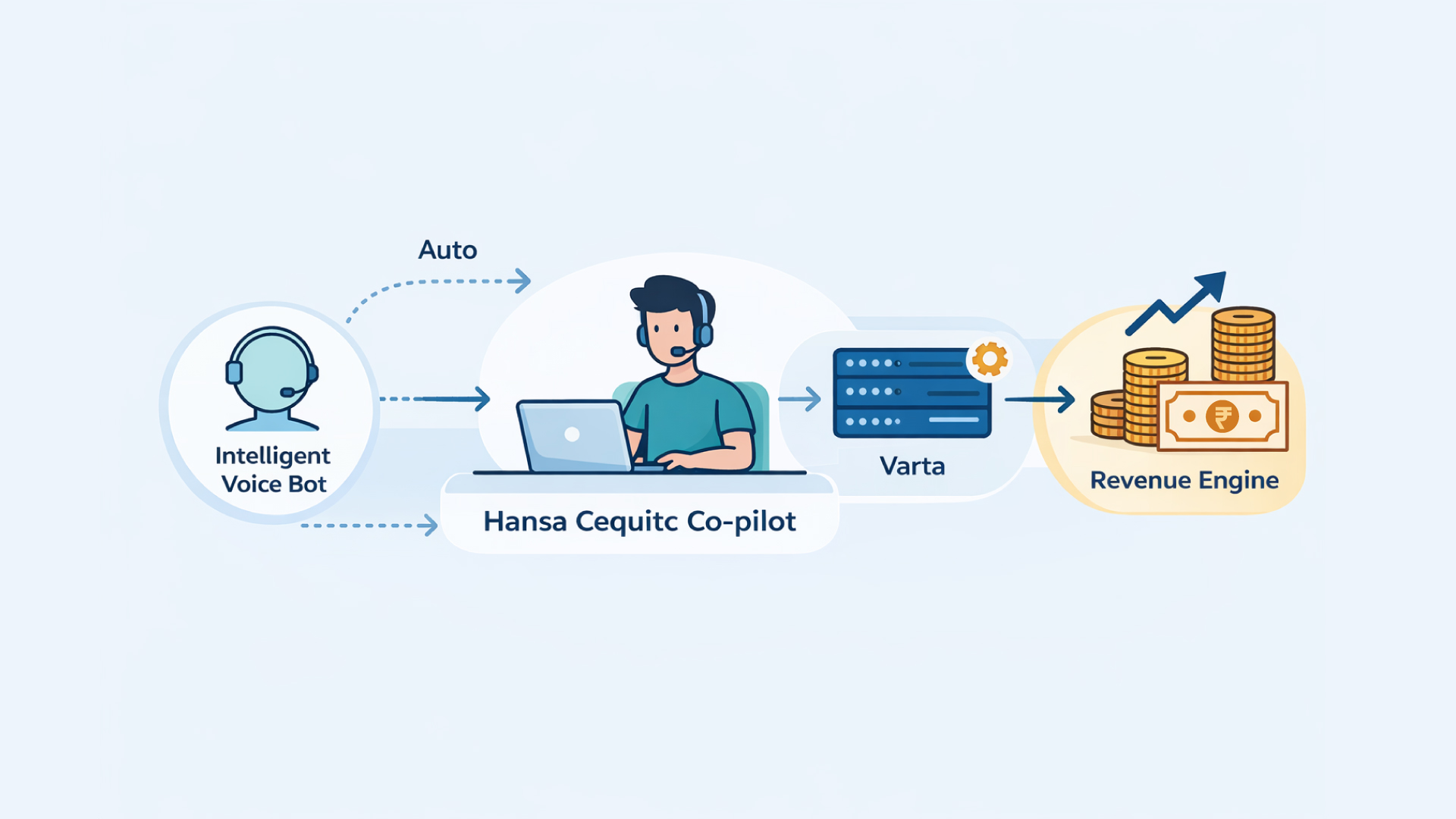
The Auto client partnered with Hansa Cequity’s Varta to deploy a state-of-the-art Agentic AI and Generative AI (GenAI) ecosystem. By integrating an intelligent voice bot for initial triage and a real-time "Agentic Co-pilot" for human representatives, The Auto Client transformed its contact center from a cost center into a high-velocity revenue engine.
The results were transformative: a 38% reduction in AHT, a 33% uplift in L2E conversions, and a 4.8% increase in booking rates. This case study explores how the shift from reactive assistance to proactive Agentic AI redefined the automotive customer experience.
Business Challenge: The Speed-to-Conversion Gap
The Auto client’s customer service operations faced a three-fold challenge:
The Auto client implemented the Varta platform, moving beyond simple chatbots to a sophisticated Agentic AI framework. This solution was built on four primary pillars:
The first touchpoint for incoming calls is a GenAI-powered voice bot designed for initial triage and entity recognition as well as Winback calls. It captures essential data—such as model interest, location, and service history—before seamlessly handing off the call to a human agent with a conversational summary.
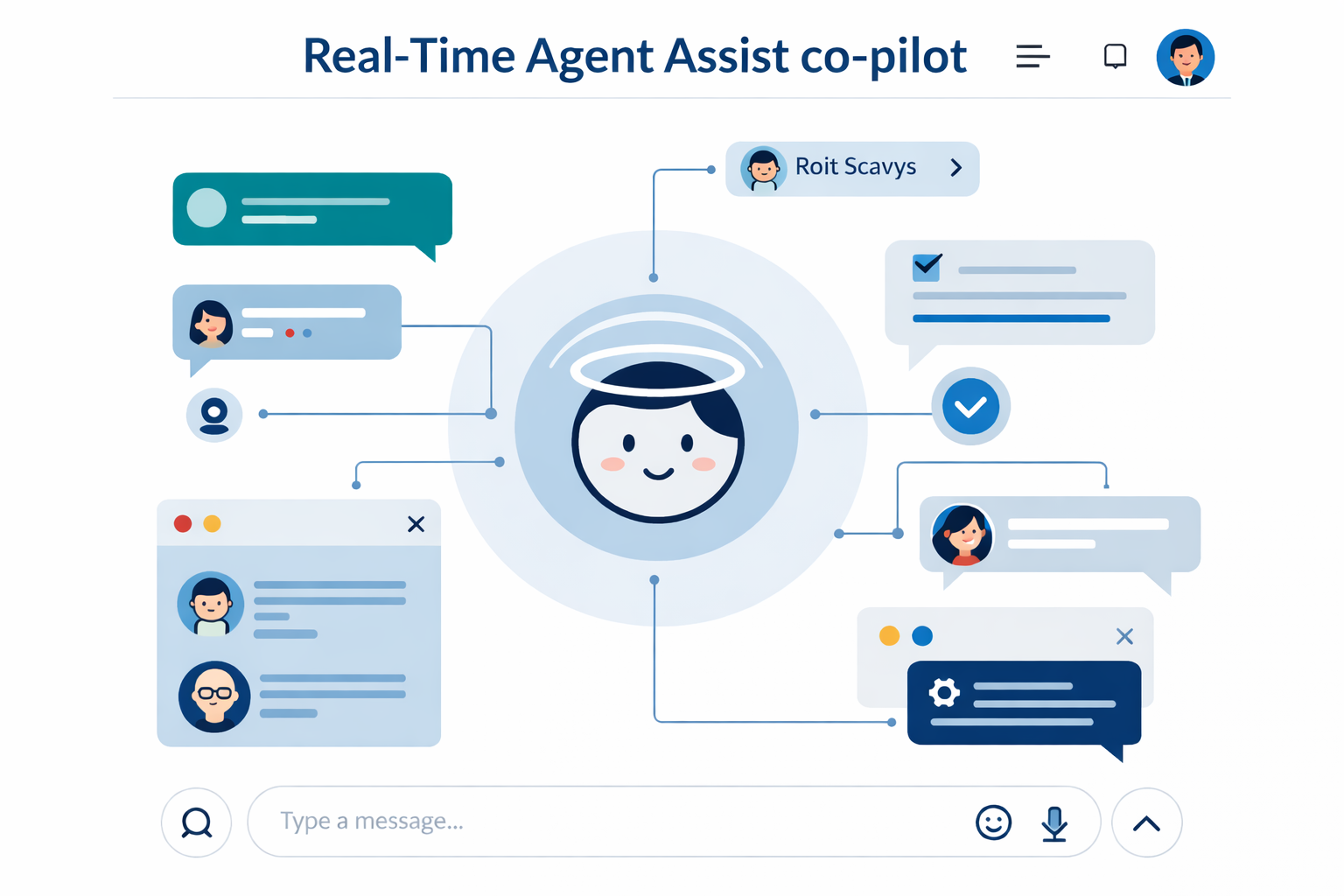
Once the call reaches a human agent, Varta’s Agentic AI begins its proactive work. Unlike traditional assist tools that require manual searches, this platform uses near zero-latency transcription and contextual retrieval to push information to the agent.
Dynamic Suggestions: If a customer mentions "family trips," the AI prompts the agent to highlight the Product’s safety ratings and specific-seater capacity.
Next-Best-Action (NBA): The system triggers workflows, such as "Schedule Test Drive" or "Upsell Service Package," based on the conversation's flow.
Ability to generate instant realtime hyper-personalized communications/ next best offers basis the call conversations and engage with the customers preferred channel
Its not only sending communications, one can also analyze the word spread over various calls and prepare the brand with the customer’s preferred offerings and services
The platform performs real-time sentiment and intent detection. If the AI detects a "high-intent" signal, it flags the agent to prioritize conversion. If it detects "negative sentiment," it provides empathy prompts or alerts a supervisor for intervention.
Immediately following a call, the system generates:
•Automatic Call Summaries: Reducing "After-Call Work" (ACW).
•CSAT/NPS Estimation: Providing instant feedback on call quality without waiting for survey responses.
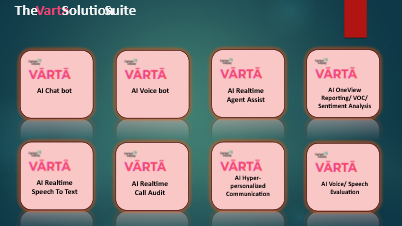
Varta enhances real-time operational efficiency by leveraging AI-powered voice and text analytics to automate task monitoring and deliver instant insights into agent performance. This enables call centers to track metrics like call quality and sentiment shifts on the fly, reducing manual oversight and boosting overall productivity.
Varta streamlines call audits by automating the analysis of audio for emotions, intent, and compliance using advanced machine learning algorithms. For interviews, it generates quantifiable insights from dialogues, helping evaluators assess candidate fit through sentiment tracking and key event detection
Implementation: A Phased Automotive Rollout
The deployment followed a rigorous, phased approach to ensure the AI was “automotive-aware.”
Results and ROI: Impact by the Numbers
The integration of Varta delivered immediate and measurable ROI, significantly outperforming traditional contact center benchmarks.
Key Performance Indicators (KPIs)
| Metric | Improvement |
| Average Handling Time (AHT) | 38% Reduction |
| Lead-to-Enquiry (L2E) Rate | 33% Increase |
| Booking Conversion Rate | 4.8% Increase |
| CSAT Score | 17% Increase |
| After-Call Work (ACW) | 83% Reduction |
Qualitative Impacts
Key Learnings and Future Outlook
The Road Ahead
Following the success of the voice implementation, we plan to scale the Varta platform across multi-channel touchpoints, including WhatsApp and Web Chat. The ultimate goal is a “360-degree Agentic Experience,” where the AI predicts customer needs before the customer even picks up the phone—truly driving the future of automotive excellence.
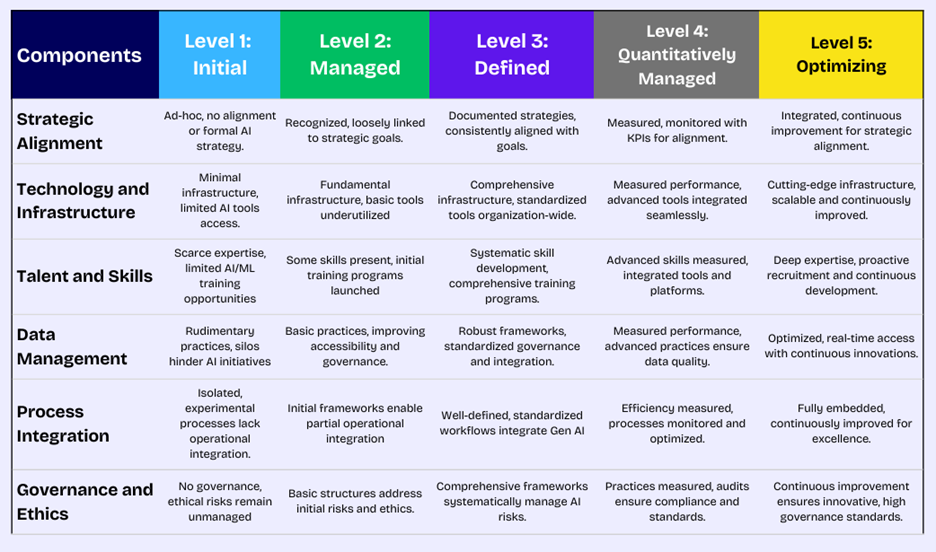
Hansa Cequity approaches agentic AI governance through its Generative AI Maturity Framework, developed with AIM Research, which dedicates a key dimension to Governance & Ethics for managing risks, ensuring compliance, and upholding ethical standards in autonomous AI systems. This framework evaluates agentic AI across maturity levels, from ad-hoc adoption to optimized innovation, emphasizing observability, bias mitigation, and regulatory alignment to support safe decision-making. By addressing governance gaps—where only 40% of enterprises have robust frameworks—the company prioritizes strong compliance for agentic workflows like autonomous productivity tools. Their marketing-specific Generative AI Governance Framework further tailors these principles to consumer safeguards in AI-driven campaigns.
In client AI rollouts, they stress aligning AI with business goals, data management, and process integration while embedding ethical controls like bias mitigation and audits. This “safe AI” approach helps mitigate risks such as hallucinations or non-compliance, adapting frameworks like those from COSO or FINOS for scalability. Their consulting leverages these to drive secure, auditable AI adoption across functions like MarTech and operations. They start with strategy alignment via their maturity framework—evaluating governance, talent, and data readiness—then deploy solutions like coagents and automated workflows.
Way forward
The world is moving beyond Large Language Models (LLMs) and Visual Language Models (VLMs). We are entering an era of embodied intelligence and world simulation. The Convergence of World Models and Industry
The GWM-1 family highlights applications that the Rubin platform is designed to accelerate at an “AI Factory” scale:
Industry Paradigms: From Engagement to Integration
While “World Models” represent the frontier, the practical application of LLMs and VLMs is already delivering significant value across sectors: